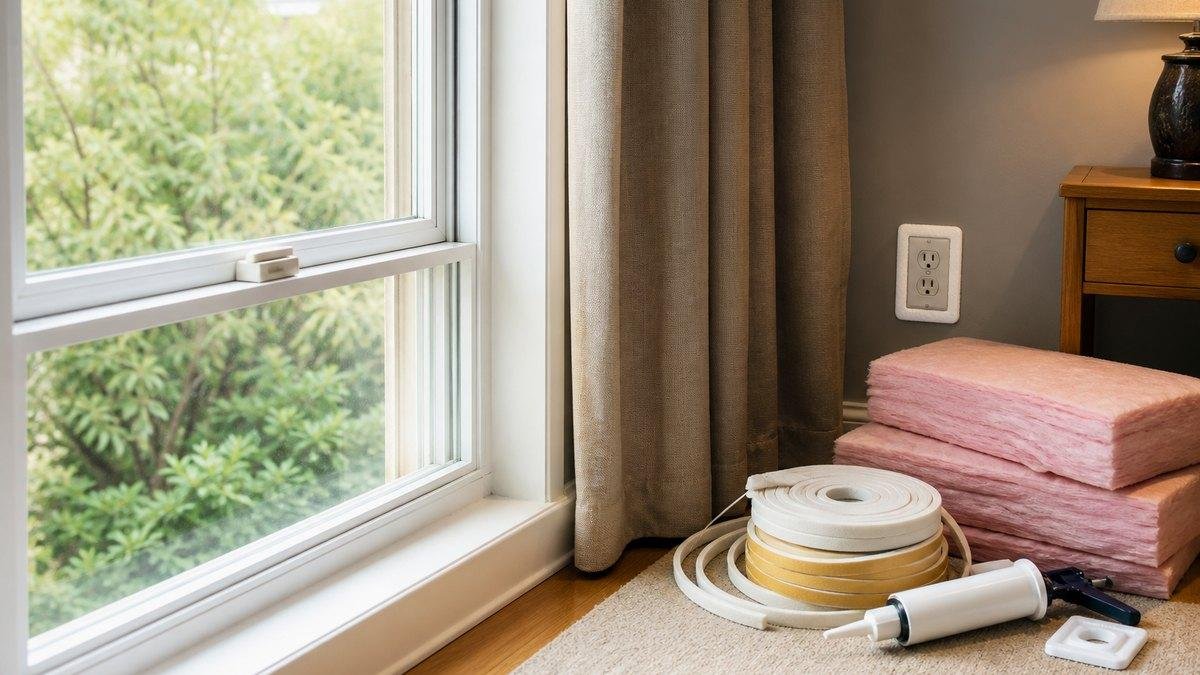
The Weatherization Assistance Program (WAP) provides free energy-efficiency improvements to income-qualified households, including insulation, air sealing, and heating system repairs, with no cost to the family. Households at or below 200% of the federal poverty guidelines qualify, and families already receiving SSI, TANF, or HEAP are automatically income-eligible.
WAP is a federal program run by the U.S. Department of Energy and delivered state by state through local agencies, which means the application starts with your state’s weatherization administrator, not with Washington. The service includes a free home energy audit, and the improvements are installed by trained contractors at no charge.
Here is what WAP covers, who qualifies, how the application actually works, and what to expect after you apply.
What the Weatherization Assistance Program Provides
WAP pays for energy-efficiency improvements that reduce a low-income household’s energy use and improve health and safety, all at no cost to the family. Services typically include attic, wall, and basement insulation, blower-door-guided air sealing, heating system repair or replacement, and health and safety testing.
The program’s results are documented. The Department of Energy reports that weatherized households save on average $372 or more every year, that the program supports about 8,500 jobs and serves roughly 32,000 homes annually with DOE funds, and that since 1976 it has helped more than 7.2 million families. In July 2025, the department announced over $400 million in new funding for the program, details on the DOE’s Weatherization Assistance Program page.
Every improvement starts with a free, on-site energy audit. The auditor uses a computerized assessment, like the NEAT tool used in Ohio’s program, to identify which measures are cost-effective for your specific home, and only those measures get installed. That is why two neighbors can receive very different sets of improvements: the audit decides what your house actually needs.
Who Qualifies for Weatherization Assistance
Income is the primary eligibility test: households at or below 200% of the federal poverty guidelines qualify, and families that received SSI in the last 12 months are automatically income-eligible. States may also use LIHEAP’s eligibility standard, 60% of state median income, whichever is more inclusive for their residents.
| Path to eligibility | Standard | What you provide |
|---|---|---|
| Income at or below 200% of poverty guidelines | Varies by household size | Income documentation for all household members |
| Automatic: SSI in the last 12 months | Any SSI receipt | SSI award letter or benefit statement |
| Automatic: TANF or HEAP in the last 12 months | Any TANF/HEAP receipt | Benefit notice or caseworker confirmation |
| State option: LIHEAP standard | 60% of state median income | Same income documentation |
Priority for services goes to households headed by someone over 60, families with a member who has a disability, families with children, and households with high energy usage or a high energy burden, meaning energy costs take a large share of income. Priority affects the waiting list, not eligibility itself.
Both homeowners and renters can apply. Renters need the landlord’s permission for the work, but the improvements and the audit are free to the household either way, and the energy savings benefit whoever pays the utility bill.
What WAP Covers and What It Doesn’t
WAP covers the measures that reduce energy use and are deemed cost-effective by the audit: insulation, air sealing, heating system repairs or replacement, and related health and safety work. It does not cover structural repairs like roofs, and it does not generally replace windows, though window-related air sealing is part of the package.
The services most households receive include attic, wall, and basement insulation; blower-door-guided air leakage reduction, which finds and seals the drafts a candle cannot; heating system repair or replacement when the system is unsafe or failing; and health and safety testing and inspections. Individualized education on energy use is part of the program too.
The honest boundaries matter because they manage expectations. WAP will not replace your roof, will not pay for a complete window replacement, and will not install solar panels as a routine measure. If the audit finds that a heating system is beyond repair, replacement is in scope; if the system just needs a tune-up, that is what you get. When your energy needs go beyond weatherization, programs like low-income home repair assistance may cover structural work that WAP does not.
Applying for Weatherization Assistance
Applying for weatherization assistance starts with your state’s weatherization administrator, not with the Department of Energy. The DOE publishes a state-by-state map of administrators, and that office directs you to the local agency, usually a Community Action Agency, that handles applications and schedules audits in your area.
The agency, not the federal government, is your actual point of contact.
- Find your state’s weatherization administrator on the DOE’s How to Apply page.
- Contact the local agency that serves your county, or apply online where the state offers it, as West Virginia and several other states do.
- Submit the application with income documentation, proof of address, and a recent energy bill.
- Complete a free, on-site home energy audit with the agency’s auditor.
- Review the approved work order and schedule the improvements, which are installed at no cost.
Gather your documents before you contact the agency: income proof for everyone in the household, a utility bill, and proof of address. Renters should bring the landlord’s contact information, because the agency will need permission for the work. Applications that arrive complete move faster than ones that need follow-up calls, and a complete application also makes it easier for the agency to verify automatic eligibility through SSI, TANF, or HEAP records.
Waiting times vary by state and funding cycle. Priority households, including seniors and families with disabilities, move up the list, and new funding rounds can reopen or accelerate service. The weatherization assistance for seniors guide covers the specific advantages and documents for older applicants.
State Examples: Ohio and Beyond
Each state runs WAP through its own agencies and income tables, which is why the exact numbers differ by location. Ohio’s Home Weatherization Assistance Program, for example, uses the 200% poverty standard with a household income table running from $31,300 for one person up to $97,300 for seven, and it delivers services through county agencies and partners like CHN Housing Partners.
In Cuyahoga County, Ohio, families that received SSI, TANF, or HEAP within the last 12 months are automatically income-eligible, and the program is delivered at no cost to homeowners and renters alike. West Virginia delivers WAP through Community Action Agencies covering all 55 counties, with an online application as the quickest route.
The pattern is consistent: federal funding, state administration, local delivery, free audit, free improvements. What changes between states is the income table, the agency names, and the online application availability, so the first step is always checking your state’s administrator rather than assuming a national application exists.
Common Misconceptions About WAP
Three misconceptions keep eligible families from applying. The first is that WAP is only for homeowners; renters qualify with landlord permission. The second is that the household pays something; the program is entirely free, including the audit. The third is that you apply to the federal government; the process runs through state and local agencies.
Another frequent question is whether WAP covers roofs. It does not, because the program targets energy efficiency, not structural repair, and roof replacement is a building-envelope repair outside WAP’s scope. Window replacement is similarly out of scope, though sealing and weatherizing existing windows is a standard measure.
If your income is close to the line, apply anyway. The eligibility standard is 200% of the poverty guidelines, which is higher than many people assume, and automatic qualification through SSI, TANF, or HEAP means benefit recipients do not need to re-prove income from scratch.
Common Questions About Weatherization Assistance
What are the requirements for weatherization assistance programs?
Households at or below 200% of federal poverty guidelines qualify, and families receiving SSI, TANF, or HEAP in the last 12 months are automatically income-eligible. Priority goes to seniors, people with disabilities, families with children, and high energy-burden households.
Is there a way to get windows replaced for free?
Not through WAP, which seals and weatherizes existing windows but does not replace them. Some states and utilities run separate window replacement programs, and income-qualified homeowners may find window assistance through other grant programs.
Does the weatherization program fix roofs?
No. WAP covers energy-efficiency measures like insulation, air sealing, and heating system work, not structural repairs. Roof replacement falls outside the program’s scope and is better addressed through home repair assistance programs.
How can I get a free HVAC system from the government?
Through WAP, when the audit finds the heating system unsafe or beyond repair, repair or replacement is covered at no cost. Eligibility requires meeting the program’s income standard and having the system assessed by the program’s auditor.
How do I apply for the weatherization assistance program?
Contact your state’s weatherization administrator, found on the DOE’s How to Apply page, which directs you to the local agency for your county. Submit income documentation, proof of address, and a utility bill, then complete a free on-site audit.
Does weatherization assistance cost anything?
No. WAP services, including the energy audit, insulation, air sealing, and heating system work, are provided at no cost to eligible households. The program is funded by the Department of Energy and delivered by state and local agencies.
Free Audit, Free Improvements, Real Savings
The Weatherization Assistance Program is one of the few assistance programs where everything is free: the audit, the insulation, the air sealing, and the heating system work. The $372 average annual savings is real money for households where energy costs compete with food and medicine.
Start by finding your state’s administrator, gather the income documents, and apply even if you think your income might be close to the line. Automatic qualification through SSI, TANF, or HEAP removes the income hurdle for many families entirely.
Before you apply, it helps to know what the audit will look for, which is covered in our home energy audit guide. The free WAP audit uses the same blower door and insulation checks, and understanding them means you will know exactly what the improvements will do for your energy bill.