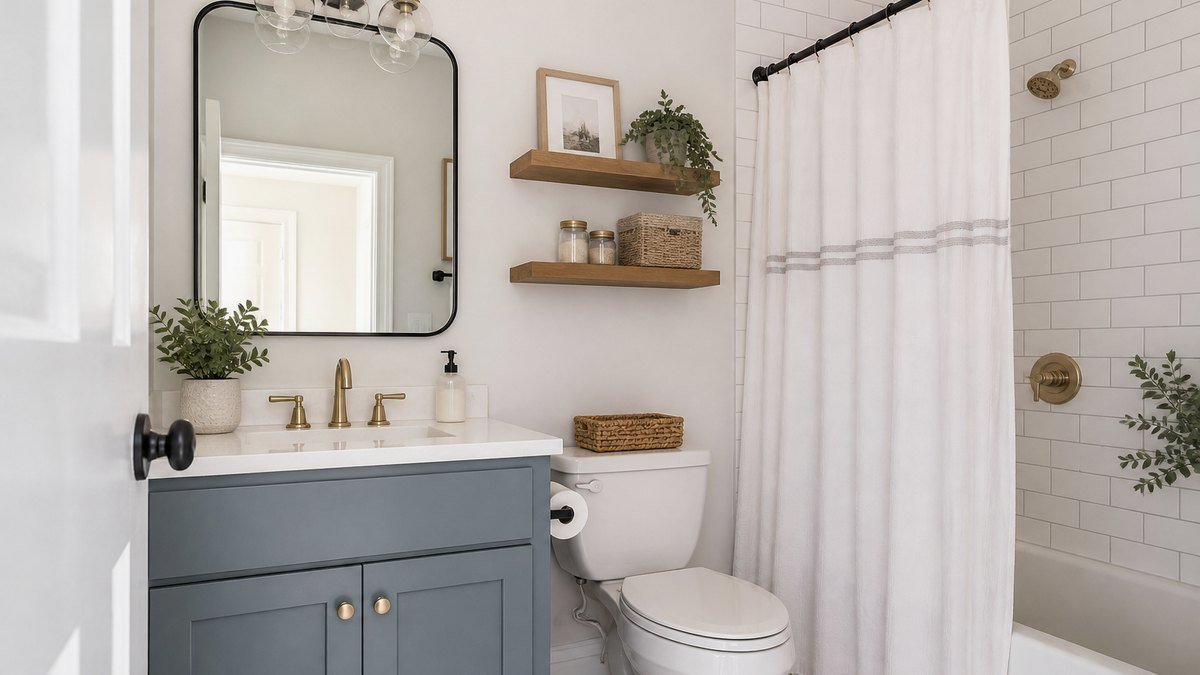
A bathroom makeover on a budget works because the room is small and the surfaces are paintable: a full refresh of walls, vanity, faucet, tile, and fixtures can run $500 to $1,500, versus $8,000 or more for a full remodel. The highest-impact projects, painting and hardware, cost under $300 combined.
The makeover bathroom on a budget rule is simple: paint the biggest surfaces first.
The bathroom is the most forgiving room for budget work, because so much of it is paintable or replaceable at small cost. Faucets take paint, tile floors take paint, and vanities take paint, all with the right primer, and fixtures like shower heads and lighting swap in for under $50 each.
Here is how to prioritize the makeover, what each project costs, and the order that makes a small budget look large.
Why Bathroom Makeovers Are So Budget-Friendly
Bathrooms are smaller than kitchens, which means fewer square feet of every surface to cover, and much of the room is made of materials that take paint well.
That combination makes the bathroom the cheapest room in the house to refresh.
The numbers are striking. A faucet refresh with specialty paint runs under $15, a full new countertop can be built for under $80, and a coat of tile paint covers a dated floor for a few hundred dollars. DIY guides like Designing Vibes’ 23-project roundup and Daitool’s 15-upgrade list are built almost entirely on paint and peel-and-stick materials, and budget storage from retailers like IKEA finishes the details.
The tradeoff is durability: painted surfaces last years, not decades, and a painted faucet will need touch-ups. For a bathroom that is dated but functional, that tradeoff is exactly right, and it is why the budget bathroom makeover is the highest-value room in the house.
The Seven Highest-Impact Projects, Ranked
Not every bathroom project earns its place in a budget makeover, and the ones that do share a trait: they cover the largest visible surface for the least money. Ranked by impact per dollar, the list is consistent across the DIY makeover guides.
| Project | Typical cost | Impact |
|---|---|---|
| Paint the walls | $30 to $80 | Fresh color changes the whole room instantly |
| Paint the vanity | $40 to $100 | The largest furniture piece, refreshed by paint |
| Paint the faucet | Under $15 | Matte black or brushed finish reads as new hardware |
| Swap shower head and curtain | $30 to $80 | Two $20 swaps modernize the shower instantly |
| Paint tile floors | $50 to $150 | Covers dated tile without demolition |
| Peel-and-stick backsplash or wallpaper | $20 to $100 | Adds pattern and texture for pennies |
| New lighting and mirror frame | $50 to $150 | Changes the mood and finishes the room |
Wall paint leads the list because color is the fastest way to change how a room reads, and it is the cheapest project per square foot of impact. The vanity paint runs second because the vanity is the largest object in the room, and a dated wood tone becomes modern in an afternoon.
Together they are the backbone of the makeover bathroom on a budget approach.
The faucet paint is the surprise hit of budget bathrooms. Specialty appliance or faucet paint in matte black or brushed nickel, applied after proper cleaning and priming, refreshes a dated chrome faucet for under $15, which is the cheapest hardware upgrade in the entire makeover playbook.
The “Looks Crazy, Actually Works” Paint Projects
Three paint projects look like they cannot work but reliably do, with the right materials: painting a faucet, painting tile floors, and painting a bathtub. All three use specialty paint designed for the surface, and all three buy years of life for dated fixtures. The key is that these are not ordinary wall paint on a bathroom surface; they are epoxy and appliance-grade products formulated for metal, ceramic, and porcelain, which is why the projects succeed when done properly.
Faucet paint. Use an appliance epoxy or specialty metal paint in the finish you want, clean the faucet thoroughly, and apply thin coats. It holds up to normal use for years, though it is not for heavy commercial use, and touch-ups are easy.
Tile floor paint. Tile-specific floor paint with a proper primer covers dated ceramic or porcelain tile, and a stencil can add a hex or geometric pattern on top. It needs a few days to cure fully before the bathroom gets heavy use.
Bathtub refinishing. Epoxy-based tub refinishing kits repaint the tub surface for a fraction of replacement cost. The tub must be immaculately clean, the ventilation good, and the cure time respected, but the result makes a 1980s tub look new.
The rule across all three: buy the paint made for the surface, do the prep, and respect the cure time. Skipping any of those three steps is where painted-fixture projects fail, not in the painting itself.
Budgeting the Makeover: $500 to $1,500
A realistic budget bathroom makeover fits in $500 to $1,500, and how you split the budget matters more than the total. The allocation below reflects the project rankings, putting the most money on the surfaces the eye sees first.
| Budget share | What it buys | Why |
|---|---|---|
| About 30% | Wall and vanity paint | The two largest surfaces set the room’s identity |
| About 25% | Paint projects: faucet, tile, tub | The dated-fixture fixes with the biggest payoff |
| About 20% | Shower head, curtain, towel bars, hardware | Quick swaps that modernize the details |
| About 15% | Lighting and mirror | Mood and finish work |
| About 10% | Textiles and styling | Towels, mat, accessories that tie it together |
The plan scales with the budget. At $500, skip the tub refinishing and spend on walls, vanity, and hardware. At $1,500, add the tub work, a peel-and-stick backsplash, and better lighting. The allocation stays the same; only the quality of materials rises.
Set aside 10% to 15% as a contingency for surprises like a cracked tile or a faucet that needs replacing instead of painting, which is standard advice in the budget-makeover guides.
2026 Bathroom Trends on a Budget
The bathroom trends gaining ground in 2026 are friendly to budget makeovers: warm neutral tones, brushed brass or matte black hardware, painted or refinished tile instead of replacement, and a shift from dated shower curtains to frameless or semi-frameless glass where possible. Each has a low-cost version.
Warm neutrals mean cream, greige, and soft sage walls, which are just paint. Brushed brass hardware means new fixtures in the finish, or painted ones, which is the faucet-paint project in trend form. Painted tile is the trend itself, since it delivers the look of new tile at a fraction of the cost.
The glass-shower direction is the one trend with a budget catch: real frameless glass is not cheap, so the budget version is a high-quality shower curtain in a neutral or textured fabric, which reads as intentional design rather than a compromise.
Budget Bathroom Mistakes to Skip
Three mistakes waste budget-makeover money in a bathroom. The first is skipping the primer on paint projects, which guarantees peeling in a humid room. The second is replacing fixtures you could paint or refinish, like a perfectly good faucet or tub. The third is ignoring ventilation, which destroys paint work faster than anything.
The primer mistake is the most expensive in the long run: bathrooms are humid, and bare wood or chrome that skips primer will peel within months. The bathroom paint guide at Home Depot and the DIY makeover guides all emphasize primer and proper prep as non-negotiable in wet rooms.
The ventilation point is easy to miss. A bathroom without good airflow traps moisture, which is the enemy of painted tile, painted vanities, and even wallpaper. Running the exhaust fan during and after showers, and adding a fan if none exists, protects every paint project you complete.
Common Questions About Budget Bathroom Makeovers
What is the new bathroom trend in 2026?
Warm neutral tones, brushed brass or matte black hardware, painted or refinished tile, and softer shower treatments are leading the direction. All of them have budget versions, which makes 2026 trends unusually friendly to makeovers.
What is the cheapest way to modernize a bathroom?
Paint the walls and vanity, then swap the shower head, curtain, and towel bars. Painting plus new textiles and hardware costs under $300 and changes the room’s identity without any remodeling.
Can I remodel a bathroom for $5,000?
Yes. $5,000 covers a full cosmetic bathroom remodel, including new vanity, countertop, fixtures, paint, and often new flooring, especially in a smaller bathroom. It is not enough for relocating plumbing or a full tub replacement.
What is a realistic budget for a bathroom remodel?
A makeover runs $500 to $1,500, a cosmetic remodel runs $5,000 to $10,000, and a full remodel with new plumbing and layout runs $15,000 and up. The makeover tier is where DIY surface work delivers the most per dollar.
Can you really paint a bathroom faucet?
Yes, with appliance epoxy or specialty metal paint and proper cleaning and priming. A dated chrome faucet takes matte black or brushed nickel for under $15 and holds up for years under normal use.
Do the same principles apply to a kitchen?
Yes. Keeping the layout and refreshing surfaces works the same way in a kitchen, where painted cabinets and new hardware are the highest-impact moves. The budget kitchen makeover guide applies the same playbook, the small bathroom makeover guide covers the compact version of this room, and the small kitchen makeover guide handles the small-space kitchen case.
Paint First, Fixtures Second, Details Last
A budget bathroom makeover succeeds on sequence: paint the walls and vanity first, then the dated fixtures, then swap the hardware and textiles. That order turns $800 into a room that reads like an $8,000 renovation, because the eye sees surfaces and details, not budgets.
Set the budget, allocate 10% to 15% for surprises, and start with the wall paint. Skip nothing on primer in a humid room, and respect cure times on the painted tile and tub.
The bathroom you have is already the right size; the makeover just changes what you see when you walk in.