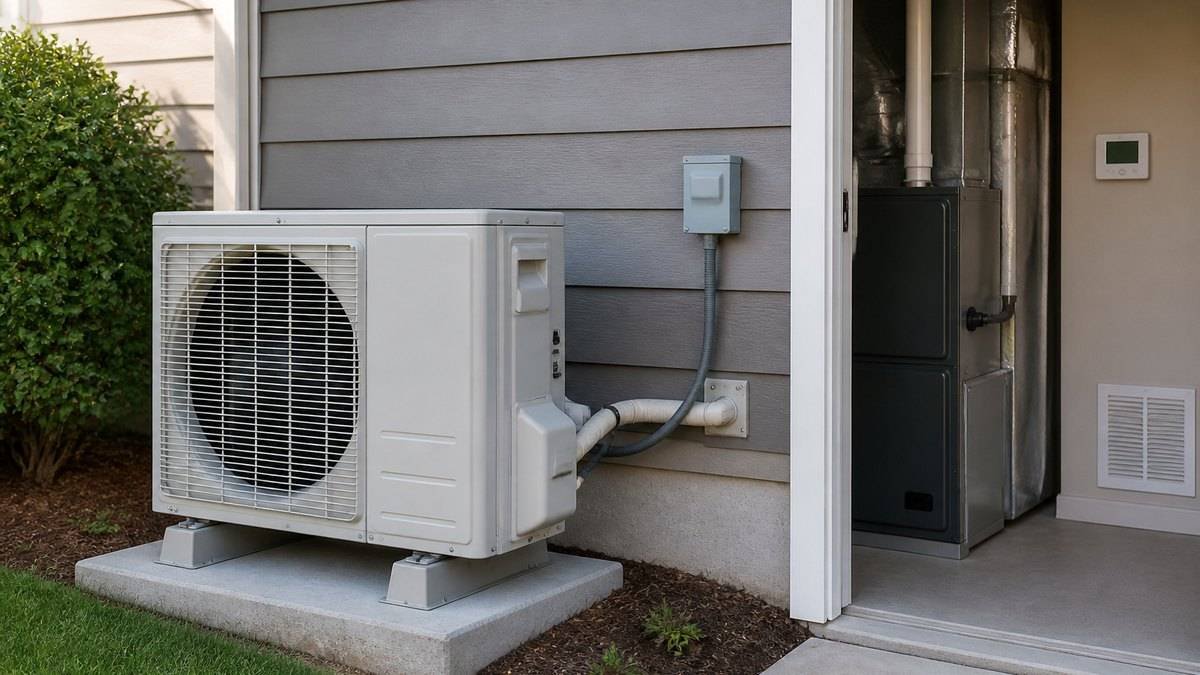
Heat pump incentives in 2026 come from three layers: the federal 25C tax credit covering 30% of heat pump costs up to $2,000 per year, the Inflation Reduction Act’s HEEHRA rebates worth up to $8,000 for a heat pump and $1,750 for a heat pump water heater, and utility programs like Massachusetts’s Mass Save that add more. A qualifying household can stack these for $10,000 or more on one installation.
These are the heat pump rebates 2026 structure in one view, and each layer has its own rules.
The federal 25C credit is the only layer with no income limit: any taxpayer can claim 30% of a qualifying heat pump’s cost and installation, up to $2,000 per year, on IRS Form 5695.
The HEEHRA rebates are income-based and administered by the states, which is why availability and amounts vary widely by where you live.
Here is what qualifies, how the layers stack, and how to claim everything you are entitled to.
Why Heat Pumps Are the Upgrade to Fund
Heat pumps are three to five times more efficient than most fossil-fuel heating systems, and switching from electric resistance heat can cut electricity use by about half, per Department of Energy data.
That efficiency is why the federal incentives are structured the way they are: the government wants heat pumps installed.
The efficiency numbers translate directly to savings. A heat pump replaces both the furnace and the air conditioner, heating in winter and cooling in summer, and the reduction in annual energy use typically pays back a meaningful share of the installation cost every year. The incentives stack on top of that recurring saving.
There is also a comfort angle: heat pumps deliver more even temperatures than most forced-air systems, and modern cold-climate models hold performance down to well below freezing, which is why they are no longer a southern-region product.
The Federal 25C Tax Credit
The 25C tax credit covers 30% of the cost and installation of a qualifying heat pump, heat pump water heater, or biomass stove, up to $2,000 per year, with no income limit. It is claimed on IRS Form 5695 and applies to installations in your principal residence.
Qualifying heat pumps must meet or exceed the CEE highest efficiency tier in effect at the start of the installation year, and biomass stoves and boilers need a thermal efficiency of at least 75%. The credit is not a deduction; it reduces your tax bill dollar for dollar, and it resets each year, so a heat pump one year and a heat pump water heater the next can each claim their own credit.
The timing caveat from the official pages: the ENERGY STAR federal tax credits page and the IRS credit page describe the credit as available for installations through 2025, with the program’s status in 2026 depending on whether Congress extends it. Plan around the current window: a qualifying installation in 2025 locks in the credit, and 2026 status should be verified before you commit.
The HEEHRA Rebates
The High-Efficiency Electric Home Rebate Act (HEEHRA) provides point-of-sale rebates for heat pumps, heat pump water heaters, electrical panel upgrades, insulation, and wiring, administered by the states and targeted at households at or below 150% of area median income. A household can receive up to $14,000 in combined HEEHRA rebates.
| Measure | HEEHRA rebate | 25C tax credit |
|---|---|---|
| Heat pump (HVAC) | Up to $8,000 | 30%, up to $2,000 |
| Heat pump water heater | Up to $1,750 | 30%, up to $2,000 |
| Electrical panel upgrade | Up to $4,000 | Not covered |
| Insulation and air sealing | Up to $1,600 | 30%, up to $1,200 |
| Electric wiring | Up to $2,500 | Not covered |
The key difference from the tax credit: HEEHRA is income-based and varies by state. Households below 80% of area median income get the full amounts, households at 80% to 150% get reduced amounts, and states are rolling the programs out on their own timelines, so a state like Massachusetts with an active program offers different numbers than a state still in setup.
The DSIRE database tracks which states are live.
HEEHRA is a point-of-sale rebate, which means the discount happens at purchase rather than at tax time, and it can be combined with the 25C credit. A household installing a heat pump plus a panel upgrade can receive up to $12,000 in HEEHRA rebates and still claim the separate $2,000 federal credit.
Utility and State Programs
Utilities and states run their own heat pump incentives on top of the federal layers, and some are substantial. Massachusetts’s Mass Save is among the most generous, with heat pump rebates and related electrification incentives for its customers; New York’s NYSERDA offers heat pump rebates in the $1,000 to $5,000 range; and Colorado’s RENU program provides low-interest loans that combine with Xcel Energy heat pump rebates.
California’s TECH Clean program and the state’s IRA rollout add to a large incentive stack, with income-qualified households eligible for the full HEEHRA amounts through state-managed portals. The amounts and forms differ by utility and state, so the reliable path is the DSIRE database and your utility’s efficiency page.
Three patterns repeat across utility programs: higher-efficiency models earn bigger rebates, income-qualified tiers pay more, and most require installation by a participating contractor.
Asking your contractor which rebates apply to the exact model quoted is the step that most often surfaces money people did not know existed.
Stacking the Layers for One Installation
The stacking math is the focus of the heat pump rebates 2026 guidance, and the value concentrates when layers combine. A low-income household replacing a furnace with a heat pump plus a panel upgrade could receive up to $12,000 in HEEHRA rebates and $2,000 from the federal credit, before counting any utility rebate.
A worked example for a household at 120% of area median income in a state with a live HEEHRA program: a $10,000 heat pump installation might receive $8,000 from HEEHRA (the 80% to 150% tier), $2,000 from the 25C credit, and $500 from a utility rebate, bringing the out-of-pocket cost to roughly zero before taxes and fees. For households above the HEEHRA threshold, the 25C credit plus a utility rebate is the core combination.
The order matters: confirm the model meets the CEE tier for the tax credit, verify your state’s HEEHRA status, and get the utility rebate quote in writing before you sign. An energy audit first confirms the heat pump is the right upgrade, and the audit cost guide tells you what that step costs and how the credit offsets it.
Applying for Heat Pump Incentives
Applying for heat pump incentives is a five-step process with distinct deadlines and forms, and the key is capturing each layer before its window closes.
- Confirm the model meets the efficiency requirement, such as the CEE highest tier for the tax credit or your state’s program requirement.
- Get a written quote that itemizes equipment, labor, and any contractor-applied discount.
- Apply to your utility or state program within its window, typically 30 to 60 days after installation for utility rebates.
- Apply to your state’s HEEHRA portal if the program is live and your income qualifies.
- File IRS Form 5695 with your return for the 25C credit, keeping receipts and the manufacturer’s certification.
Two documents matter everywhere: the itemized invoice and proof the equipment meets the efficiency tier, whether that is the ENERGY STAR listing or the CEE tier documentation. HEEHRA applications also need income verification, so have the previous year’s tax return or income statement ready.
Common Questions About Heat Pump Rebates
Will there be a tax credit for heat pumps in 2026?
Under current law the 25C heat pump credit applies to installations through December 31, 2025, and its 2026 status depends on whether Congress extends it. The HEEHRA state rebates are the main federal funding path for heat pumps in 2026.
What heat pumps qualify for the $2,000 tax credit?
Heat pumps that meet or exceed the CEE highest efficiency tier, not including any advanced tier, qualify for the 30% credit up to $2,000 per year, as do biomass stoves and boilers with a thermal efficiency of at least 75%.
How much is a heat pump for a 2000 square foot house?
A heat pump for a typical 2,000-square-foot home runs about $5,000 to $15,000 installed, depending on the system size, efficiency tier, and local labor rates. The 25C credit covers 30% up to $2,000, and HEEHRA can add up to $8,000 for income-qualified households.
Can you get a heat pump for free?
There is no US program that provides a heat pump completely free, though income-qualified households in states with live HEEHRA programs can have most of the cost covered, and the Weatherization Assistance Program can repair or replace heating systems at no cost for eligible households.
What heat pump rebates exist in California?
California runs the TECH Clean program and the state’s HEEHRA rollout, with income-qualified households eligible for the full $8,000 heat pump rebate plus utility incentives. Check the state’s IRA portal and your utility’s efficiency page for current amounts.
What are the Mass Save heat pump rebates in 2026?
Mass Save offers heat pump rebates and related electrification incentives for Massachusetts customers, among the most generous in the country, with income-qualified tiers adding more. Current amounts are on the Mass Save site and the DSIRE database.
Stack the Credit, the Rebate, and the Utility Money
The heat pump incentive stack is the largest the federal government has ever offered for home electrification: $2,000 from the 25C credit for any taxpayer, up to $14,000 in HEEHRA rebates for income-qualified households, and utility money on top. Missing any layer leaves real money on the table.
Confirm the model’s efficiency tier, check your state’s HEEHRA status, and get the utility rebate in writing before you sign. The 2025 window for the federal credit makes timing a real consideration, and the state rebates are the piece that changes by location.
The combination, not any single program, is what makes a heat pump affordable in 2026.