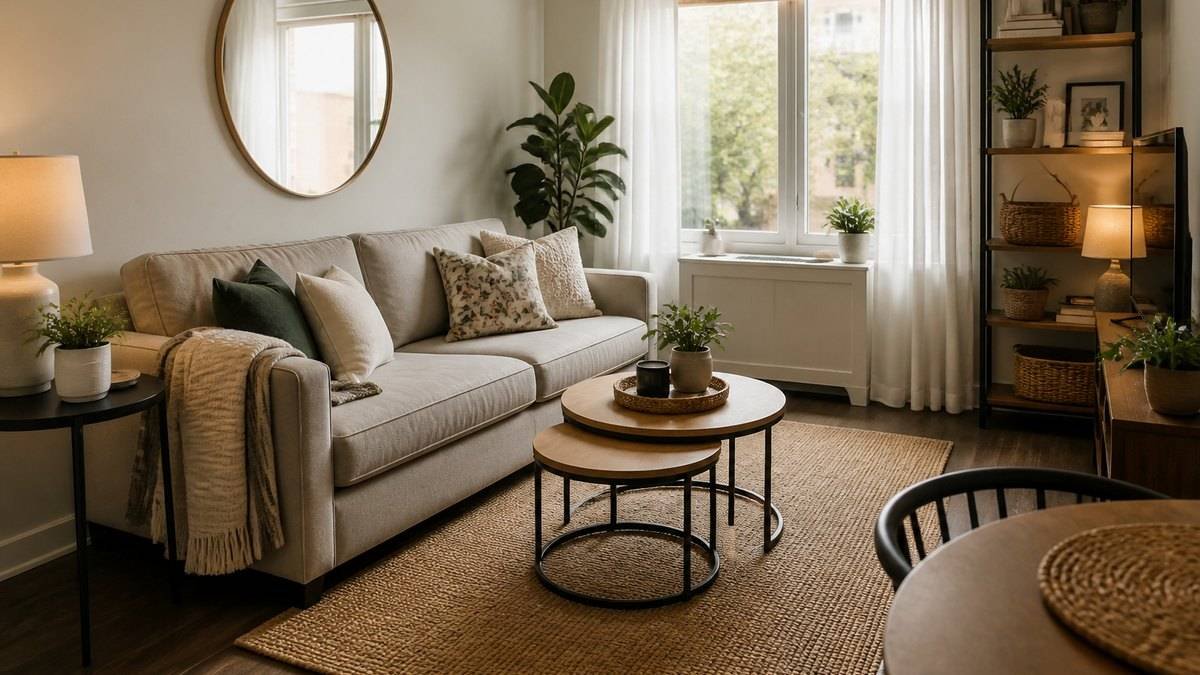
Budget decor works when one or two pieces carry the room, and the home decor ideas budget-conscious shoppers actually need are the anchoring ones. Spend most of the money on the anchor, then let a palette and a few repeat materials carry the details. That order turns a cheap room into an intentional one.
The failure mode is familiar: a new throw, a new print, a new tray, none of them related, and the room still looks like nobody styled it. The room did not need more things. It needed one anchor piece and a plan for everything else.
A lamp I found for a few dollars sat in a box for two weeks before it went into the reading corner. It has since been moved twice more. Each move was free, and each one shifted the room more than the small purchases I kept making in between.
Spend Most of the Budget on Anchor Pieces
Put about 80% of a room’s decor budget into one or two anchor pieces, the sofa, the rug, or the main light fixture, and reserve the remainder for small swappable items. Anchors set the room’s scale and tone; everything else follows them.
An anchor is the piece your eye lands on first and the one that defines the room’s proportions. A well-chosen rug makes the furniture around it look deliberate. A real lamp with a proper shade changes the light in a way ten small accessories never will. The sofa, if the room has one, anchors the whole space.
Everything else sits in the small-budget tier: pillow covers, wall art, plants, trays, candles. These are the pieces you can replace in a season without guilt, which is exactly why they should be cheap. The error is spending in reverse, ten small buys that add up to one mediocre sofa.
Three tests pick the anchor. Size: the piece should set the room’s proportions, so a rug or sofa beats a vase. Color: the anchor should carry the room’s main color, which makes every smaller piece easy to match. Use: the anchor should be the thing touched daily, because budget logic favors what gets used. A vase is rarely the anchor, no matter what it cost, because it does not set the room’s proportions. These tests also explain why the anchor is the purchase worth waiting for: it is the one buy that must be right the first time.
One strong anchor beats three weak ones.
The split gets stricter in a compact home, where every piece competes for the same few square feet. The space-efficiency side of that argument is covered in our small living room decor ideas that maximize space; the budget logic above stays the same at any room size.
Start the anchor hunt with the largest surface you cannot ignore, and buy it used if that stretches the budget. A solid secondhand sofa or rug, cleaned and properly sized, outperforms a flimsy new one at the same price.
When buying anchors secondhand, inspect what the seller cannot hide: springs and frame on a sofa, backing and wear pattern on a rug, wiring on a lamp. Cosmetic flaws are negotiable, structural ones are not. A rug with worn edges can be trimmed; a sofa with a broken frame cannot be cheaply fixed.
One Palette and One Repeat Material Make Cheap Things Look Intentional
Restrict the room to three colors and repeat one material, wood, linen, or black metal, across the small pieces. Cheap objects read as deliberate when they share a palette, because the eye registers the pattern rather than the price.
This is the cohesion that expensive-looking rooms have and budget rooms lack. Pick a main color for the large surfaces, a second for the textiles, and a third used sparingly as an accent. Then carry one material through the accessories, warm wood frames, woven baskets, black metal lamps, whatever the room already leans toward.
The mechanism is simple: the eye scans a room for repetition, and repetition reads as planning. Three identical cheap frames in a row look like a decision. Three different cheap frames scattered across a shelf look like leftovers. The same frame, painted the same color, in a group of three, looks like a collection.
Apply the same idea to what you already own before buying anything. Gather every object currently on display, keep the ones that match the palette, and box the ones that do not. Most rooms reveal a usable collection the moment the mismatched pieces leave.
Build the palette from what already anchors the room. Take the sofa’s main tone, the floor’s neutral, and one accent from a piece you love, and those three become the palette. Buying to match an existing anchor costs less than buying to create a new scheme, because half the work is already done.
This palette rule also settles the question of what to buy secondhand: if it matches the three colors, it fits, regardless of what it cost. If it does not match, no price makes it fit. It is also why minimalist rooms photograph well on a tight budget: the palette does the work that expensive styling usually does, by removing everything that does not match.
Three colors. One material. Done.
High-Impact Upgrades, Ranked by Return
Paint, textiles, and lighting deliver the biggest visual return per dollar; wall decor and new furniture come last. Do the free moves first, then paint, then swap textiles, and only then buy anything new.
Work the list in order and stop when the room looks finished. The home decor ideas budget-conscious rooms benefit from most, in sequence, are these. The order matters because each tier changes how the next one reads: paint resets the backdrop, textiles carry the color, lighting changes how both look, and wall decor fills the gaps the first three left behind.
- Paint. One wall or one piece of dated furniture. A quart of paint and an afternoon outperform most purchases in the same price range, and it is reversible if you rent. Roller over brush for walls, satin for furniture, primer under anything glossy.
- Textiles. Pillow covers bought as covers rather than new pillows, a throw, curtain panels hung higher and wider than the window. Textiles are the fastest way to add the palette color from the previous section, and a curtain panel hung four inches wider than the window on each side makes the window look larger than it is.
- Lighting. Move a lamp from another room before buying one. When you do buy, choose a warm bulb temperature around 2700K, which makes every other color in the room look better. Two lamps at different heights beat one ceiling fixture in every room.
- Wall decor. Printable art in frames you made or thrifted, a gallery of family photos, one good mirror. This is the tier where DIY pays off, because frames carry most of the look; thrifted frames in one finish, painted if needed, make the prints inside secondary.
- Furniture. Last, and only after the room has proven what it needs. Secondhand pieces with good bones beat new flat-pack at the same price, and a coat of paint hides a dated finish. Check joints and drawers before paying, because a wobbly piece will not steady with use.
Each tier is cheaper than the one below it on the list, and the earlier tiers are the ones guests notice first. A freshly painted wall and proper lamp light will do more for a room than a new chair ever did.
The tiers assume the free pass from the next section already happened, because buying into clutter defeats the sequence. A room with forty objects on its shelves does not need a new lamp; it needs thirty of those objects removed. Run the edit first, then the paint, then the textiles, and the room usually stops asking for purchases halfway down the list.
Free and Near-Free Moves That Change a Room
Rearranging furniture, clearing surfaces, and changing light placement cost nothing and often do more than new purchases. Borrow a lamp from another room before buying one, and edit what is already there first. The order matters: rearrange, then edit, then relight, and only then shop.
Pull the sofa away from the wall by a few inches and angle the chairs toward each other. Rooms read differently the moment the seating stops lining the walls, and the exercise costs an afternoon.
Edit the surfaces. A coffee table with one tray, one book, and one plant looks styled; the same table holding five objects looks cluttered, and the clutter is what reads as cheap. Bookshelves work the same way: remove a third of what is on them and the shelf gains presence.
Lighting placement is the free move people skip. One floor lamp pulled into the seating group, a reading light beside the chair, and a warm bulb in the overhead fixture change a room’s mood without buying anything. Try the lamp positions for a week before deciding that something needs to be purchased.
Houseplants finish the list at near-zero cost. Many common plants grow new plants from cuttings, and most plant owners will happily share. A rooted cutting in a thrifted pot costs nothing and looks like a deliberate styling choice within a month. Pothos and spider plants root in water in a few weeks, which makes them the easiest starting point.
Where Saving Money Backfires
Sofas, mattresses, and anything that needs professional installation are the wrong places to cut. A cheap sofa fails in two years while a solid one lasts a decade, and the same logic holds for anything load-bearing or wired into the house.
The guideline is simple: spend where the body and the eyes land every day, save where the eye passes over. A budget room with a good sofa and a cheap side table looks intentional; the reverse looks exactly like what it is.
Professional work is not a place to bargain-hunt either. Electrical, plumbing, and structural changes should go to licensed trades, because the failure mode is not aesthetic. If a project needs a permit or a pro, the decor budget should not be deciding the contractor.
Renters carry an extra constraint: the upgrade must survive the lease. Damage-free hanging, peel-and-stick surfaces, and furniture that moves with you have their own playbook in our renter-friendly decor ideas without wall damage. The budget rules above still apply, with reversibility added as a requirement.
Timing is a budget tool too. Furniture and appliance sales cluster around holiday weekends, and off-season buys, patio furniture in autumn, rugs in summer, run noticeably cheaper. If the anchor is not urgent, waiting eight weeks for the sale cycle often beats the instant discount.
The anchor logic keeps the order straight: one strong piece, one palette, one repeated material, and restraint everywhere else. A room that reads as expensive was almost never expensive.
Frequently Asked Questions
How can I decorate my home on a tight budget?
Put most of the budget into one anchor piece, then build around it with a three-color palette and swapped textiles. Paint one wall or one piece of furniture first, move lamps around before buying new ones, and use pillow covers rather than new pillows. Save the furniture purchases for secondhand finds with good bones. That sequence, anchor, palette, paint, gives a small budget a clear order of operations.
How do I decorate a room with almost no money?
Rearrange the furniture, clear the surfaces, and change the lighting, all of which cost nothing. Pull the sofa off the wall, remove a third of what sits on shelves, and move a lamp in from another room. Free moves usually reveal that the room only looked unfinished because nothing was edited.
How do I make my home look expensive on a budget?
Cohesion is the trick: one anchor, a limited palette, and one repeated material make inexpensive pieces look intentional. Repeat one material, like wood or black metal, across the accessories and keep the room to three colors. The eye reads the pattern as planning, which is what expensive rooms have in common. That pattern is cheaper than any single expensive object, and it works at every budget level.