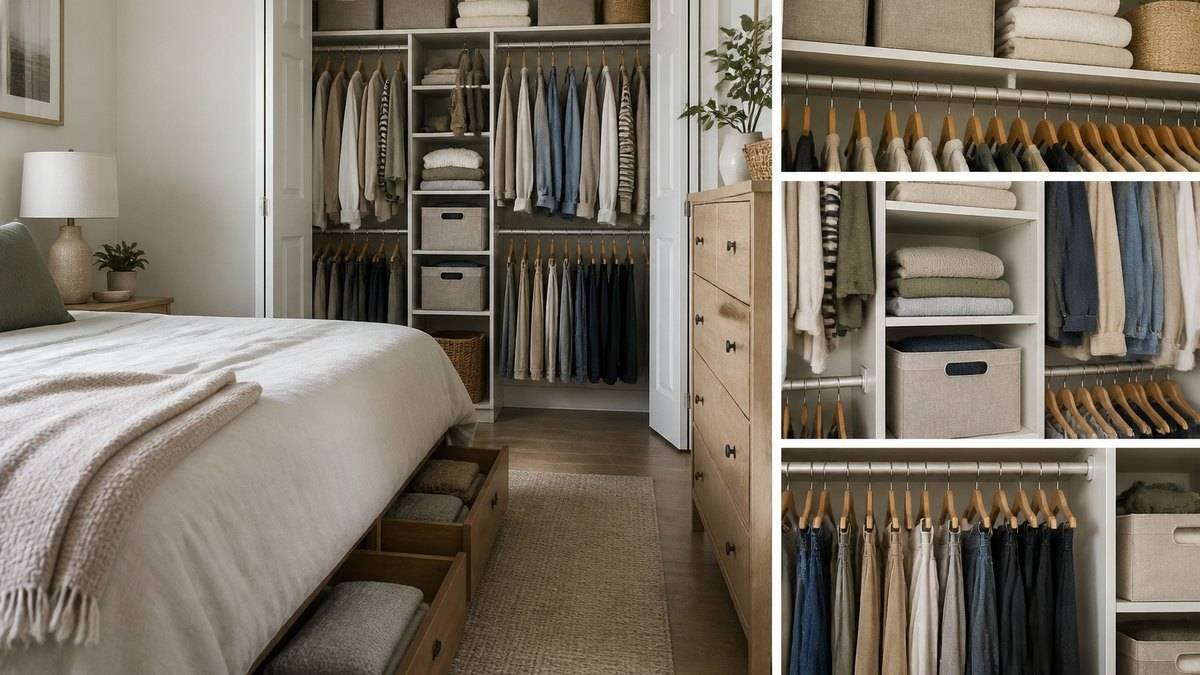
A linen closet stays neat when towels, bedding, and household supplies each own a shelf. The closet that collapses into a pile is the one organized without a system; the one that holds is the one where every category has a home and a folding rule.
Ideas for linen closet organization work in the same order every time: empty the closet, divide it into three areas, and put a folding system on top. The order below follows that method, and none of it requires a bigger closet.
The whole job is an afternoon, and most of the supplies cost under $50.
Empty It, Sort It, Keep Only What Fits
The first step is emptying the closet completely and sorting everything into three piles, keep, donate, and toss, before anything goes back in. The purge is the step that makes the rest of the system possible, because a closet full of unused sheets cannot be organized, only rearranged.
Empty the linen closet onto the floor or the bed and sort by category, not by memory. The keep pile holds what fits the beds and the bathrooms in use; the donate pile holds the twin sheets from a bed that left years ago, the mismatched sets, and the towels with frayed edges; the toss pile holds what is stained or torn past use. The rule of thumb that makes the keep pile honest is two sets per bed, one in use and one as backup, and one towel set per bathroom plus one guest set.
The purge answers the question that drives everything: what actually belongs in this closet. The decorative pillow covers, the holiday linens, and the items that are fabric but not linen, blankets, quilts, and throws, either earn a shelf or leave, because a linen closet that holds everything made of cloth is a closet that holds nothing well.
Three Areas: Towels, Bedding, and Household Supplies
A linen closet divides into three areas, towels on the easy shelves, bedding in the middle, and household supplies at the top or bottom, and each area gets one rule that makes it self-maintaining. The three areas match how the closet is used, the towels daily, the bedding weekly, the supplies occasionally.
The towel area sits at eye level, the most-used shelf in the closet. Bath towels fold the same way, stack with the fold facing out, and sort by type, bath, hand, and washcloth, so grabbing the right towel takes one motion. A basket of guest towels or a stack of spare sets earns the lowest towel shelf, and the towels in daily rotation stay in the bathroom.
The towel stack works when the folding matches the shelf, not the other way around. Measure the shelf depth, fold the towels to fit, and stack no more than six high, because a stack above six topples at the first grab and undoes the neatness in a week. The washcloths fold smaller and file in a bin beside the towels, and the hand towels fold in thirds to match the bath towels’ width.
The bedding area holds the sheets in sets, not in a pile. Each bed’s set, fitted sheet, flat sheet, and pillowcases, folds together into one bundle or goes into one labeled bin, with the size written on the outside. Store by size, queen sets together, twin sets together, so the hunt for the right sheet ends at the label instead of the bottom of the stack.
The household supplies area takes the top shelf or the bottom shelf: the extra toiletries, the cleaning products, the guest amenities, and the first-aid kit. Clear bins with labels keep the supplies visible and separate, and the rule is one category per bin, because a bin holding toiletries, cleaners, and batteries is a bin that becomes a junk drawer.
Towels, bedding, supplies.
The Folding System That Makes Room
The folding system has two parts: a uniform fold for the towels and the flat sheets, and the fitted-sheet method that turns the elastic corners into a flat rectangle. The system is what makes the shelves hold more and look neat, and it takes about ten minutes per stack the first time.
Towels fold to a standard size, the size that matches the shelf, and stack with the fold facing out so the stack reads as one clean block. The uniform fold matters more than the specific method, because a stack of identical folds takes half the shelf space of a pile of uneven ones, and it stays standing instead of tumbling at the first grab.
The fitted sheet is the folding problem every linen closet faces. The method that works: tuck the elastic corners into each other, lay the sheet flat, fold the rectangle in half twice, and finish with the elastic edge folded under. It takes two tries to learn and ten seconds after that, and it is the difference between a neat bedding shelf and a pile of wrinkled elastic. Do the same fold every time, even when the sheet is fresh from the dryer, because a consistent fold is what makes the stack uniform, and a uniform stack is what makes the shelf look organized and stay that way.
The alternative to stacking is filing: folded sheets and towels stored vertically in bins, side by side like files, so every item is visible and grabbable without disturbing the stack. Vertical filing works best on deep shelves, where stacked piles hide the bottom items, and it turns a deep closet from a black hole into a drawer. The filing method is the one that survives a deep shelf, because nothing gets buried behind the front row.
Small and Deep Linen Closets: The Layouts
Small linen closet organization ideas follow one rule, go up and go vertical, while deep closets get the opposite fix, pull everything forward with bins that fit the full depth. A small closet stacks the three areas vertically; a deep closet files them front to back.
The small closet is a vertical problem. Narrow shelves hold the towels folded to fit, the bedding in slim bins, and the supplies in a door organizer, and the shelf spacing adjusts to the stack heights instead of the other way around. A door-mounted organizer adds a whole extra surface, and a step stool makes the top shelf usable instead of dead.
The deep closet is a front-to-back problem. Deep shelves hide everything behind the front row, so the fix is storage that reaches the back: adjustable shelves set to the bin heights, pull-out drawers or wire baskets that slide, and bins bought to fit the full depth so nothing gets lost behind the front row. The rule is that every inch of depth has a purpose, because a deep shelf with a single row of towels in front is a shelf that is 70 percent wasted.
The deep-closet bins do the work the shelves cannot: a bin that fits the full depth holds the folded bedding front to back, so pulling the bin out reaches the back items without disturbing the front. Choose bins without lids for the daily items and lidded bins for the seasonal, and label the ends, not the tops, because the end label is the one visible when the bin is on the shelf.
The same vertical logic that fits a small linen closet runs through the rest of the house, and the toy storage ideas for small spaces on this site apply it to a room full of different categories, shelf by shelf.
Bathroom and Hallway Linen Closets
Bathroom linen closet organization ideas split the closet into the wet zone and the dry zone, towels and washcloths on one shelf, toiletries and cleaning supplies on another, with the guest amenities in a labeled basket. The hallway closet near the bedrooms holds the bedding for the beds it serves, staying the spare-sheets depot for the house.
The bathroom closet is the hardest-working linen closet in the house, because it holds both the linens and the supplies. Keep the towels at eye level, the toiletries and the cleaning caddy on the shelf below, and the guest basket on the bottom, and separate the wet-zone items from the dry so a damp washcloth does not sit against the spare toilet paper.
The small bathroom linen closet is the vertical version of the same split: a door organizer for the toiletries, a slim shelf for the washcloths, and a caddy that carries the cleaning supplies to the room that needs them instead of storing them in the way. A caddy is the small-bathroom trick, because it moves the supplies out of the closet when they are needed and returns them when they are done.
The bathroom closet also holds the spare toilet paper, which belongs in a bin on the bottom shelf, not balanced on top of the towels, and the hamper or laundry bag earns a spot if the bathroom is the drop point for the dirty linens. The wet-dry split keeps the damp items from touching the clean ones, which is the detail that keeps the whole closet fresh.
The hallway closet plays the spare-parts role for the bedrooms. The bedding stores by room, the bedroom’s sets together, the guest room’s sets together, and the top shelf holds the extra pillows and the blankets. The hallway linen closet organization ideas that work keep the guest sets labeled and ready, so a guest room change takes ten minutes instead of a search.
Household Supplies: The Stuff That Isn’t Linen
The household supplies live in clear, labeled bins, one category per bin, and the medications and cleaning products store out of reach of children, on the top shelf or in a locked bin. The supplies are the third area of the linen closet, and the safety rule comes before the neatness rule.
The supply bins hold what the linen closet is for beyond linen: the extra toiletries, the cleaning products, the batteries, the first-aid kit, and the guest amenities. Each category gets a clear bin with a label, so the bin contents are visible without opening anything, and the bins stack on the top shelf or sit on the bottom shelf, away from the towels and the bedding. A clear bin is the only supply container worth buying, because the visible contents are the reminder that the category exists.
The safety rule is the one that does not bend: medications and cleaning products store out of children’s reach, on the top shelf or in a locked bin, and the first-aid kit sits somewhere adults can reach in a hurry. The rule is standard household safety practice, and it matters more than the fold of any towel, because a linen closet within a child’s reach is a linen closet that needs the hazard pass first.
The same one-home logic that organizes the linen closet runs through the toy storage ideas on this site: everything gets a designated spot, the spot is easier to use than the floor, and the system survives because the categories stay separate. Ideas for linen closet organization that last include the safety pass, because a neat closet and a safe closet are the same closet.
The Seasonal Swap That Keeps It Neat
The linen closet stays neat with a twice-a-year swap at the season change: the summer bedding and the winter bedding trade places, and the purge rules run again. The swap is the maintenance step that keeps the closet from filling back up, and it takes an afternoon twice a year.
The swap has two parts. At the season change, the bedding for the coming season moves to the easy shelves and the other season moves to the top shelf or a storage bin, and the same swap covers the blankets and the quilts. The second part is the mini-purge: the towels with frayed edges, the sets missing pieces, and the supplies nobody used since the last swap move to the donate pile or the toss pile. Keep a running list on the closet door or the family calendar of what the swap found, because the list is what turns next season’s swap from a guess into a checklist.
The swap is also the moment the labels get re-checked. A bin labeled for a category that no longer exists gets relabeled, a shelf that holds two categories gets split, and the closet follows the household instead of the original plan. A linen closet that gets a seasonal swap is a linen closet that stays organized, because the system is maintained, not just installed. The best ideas for linen closet organization all end the same way: categories that stay separate and a swap that happens on schedule.
Three areas, one folding system, and a twice-a-year swap is the whole method, and it costs about $40 in bins and labels. The linen closet that stays neat is the one where the towels fold the same way, the sheets live in labeled sets, and the swap happens on schedule, and that is an afternoon of work repeated for an hour twice a year.