Attic insulation qualifies for a federal tax credit covering 30% of the product cost, up to $1,200, for work completed through 2025, and most utilities and states layer their own insulation rebates on top. For a typical attic project, the combined incentives can cut the real cost nearly in half.
The attic insulation rebates and tax credits structure is a three-layer stack, and most homeowners only know about one layer.
The federal credit covers insulation products plus qualifying air-sealing materials like weatherstripping, spray foam, and caulk, and it stacks with utility rebates rather than replacing them. That stacking is the part most homeowners miss: the tax credit and a rebate are separate money, and both can apply to the same project.
Here is what qualifies, how much each incentive is worth, and how to apply so you capture all three layers.
Why Attic Insulation Is the First Upgrade
Attic insulation is the highest-ROI energy upgrade in most homes because heat rises, and a poorly insulated attic is where most of it escapes. The Department of Energy recommends most attics reach R-38 to R-60, roughly 12 to 15 inches of fiberglass or cellulose, and most older homes are well below that.
The savings are real and recurring. Air sealing combined with adequate insulation reduces a home’s average energy costs by about 11%, per ENERGY STAR’s methodology, and attic insulation is the single largest piece of that.
Unlike equipment that eventually wears out, insulation keeps working for decades with no moving parts.
There is also a comfort angle: a properly insulated attic means more even room temperatures, fewer drafts, and less strain on the heating and cooling system, which extends its life. That combination is why energy auditors consistently rank attic insulation near the top of their recommendation lists.
The Federal Insulation Tax Credit
The Energy Efficient Home Improvement Credit covers 30% of insulation product costs, up to a $1,200 credit, for products purchased and installed between January 1, 2023, and December 31, 2025, on your principal residence. The credit is claimed on IRS Form 5695.
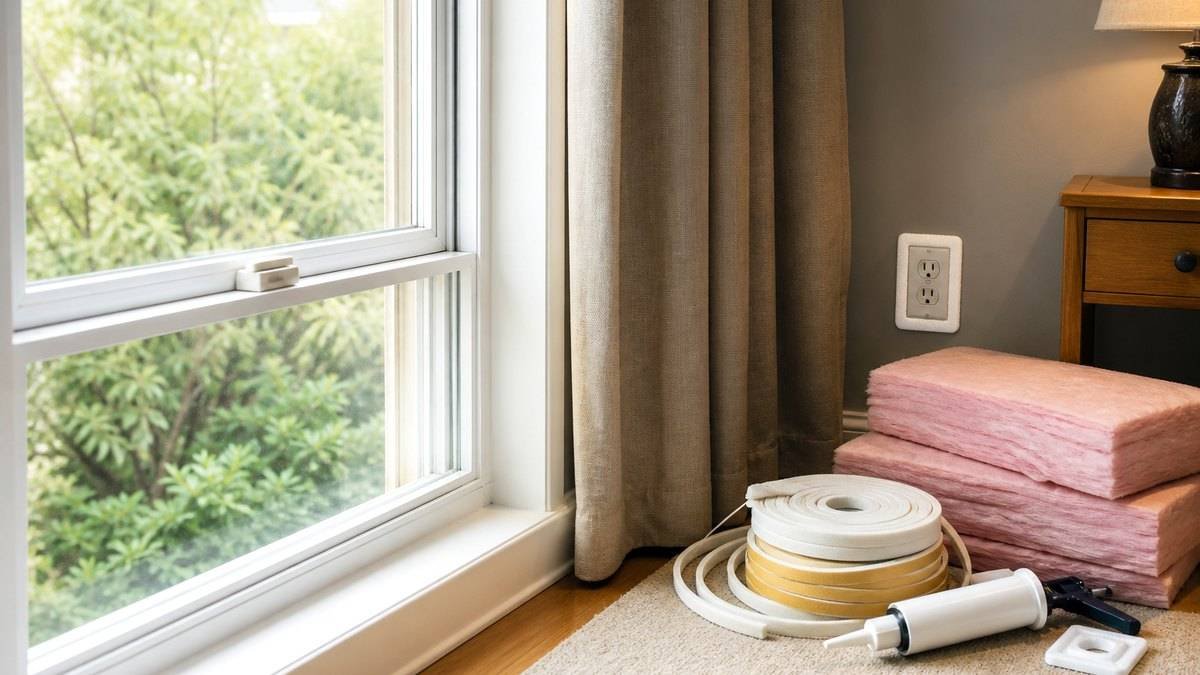
What qualifies is broader than most people think. The ENERGY STAR insulation tax credit page lists batts, rolls, blow-in fibers, rigid boards, expanding spray, and pour-in-place insulation, plus air-sealing products including weatherstripping, spray foam in a can, air-sealing caulk, and house wrap, as long as they carry the manufacturer’s certification statement. Insulation materials and air-sealing products are both in scope, which is the detail most people miss when they assume the credit only covers fiberglass batts.
The $1,200 credit for insulation and other envelope work sits inside an annual structure worth understanding: up to $1,200 per year for home envelope improvements and heating equipment, plus up to $2,000 for heat pumps and related equipment, for a combined annual maximum of $3,200. If you insulate this year and upgrade the heat pump next year, each year gets its own limit, which is why spreading projects across tax years can maximize the total credit.
Utility and State Insulation Rebates
Utility and state programs round out the attic insulation rebates picture. Los Angeles’s LADWP pays $0.50 per square foot for attic insulation above R-19, or $0.30 per square foot below that, with a limited-time launch bonus adding $0.25 per square foot through mid-2026.
The exact rates and windows differ by utility, which is why checking your own provider’s efficiency page is the only reliable way to know what applies to you.
Wisconsin’s Focus on Energy program rebates insulation and air sealing installed by participating contractors, offers DIY rebates, and pays higher amounts to income-qualified households, often after a $500 to $700 home energy assessment. Xcel Energy and NYSEG run comparable insulation and air-sealing rebate programs in their territories, and the assessment-first model is the common thread across the larger programs.
The pattern across programs: rebate amounts vary by region, most require installation by a participating contractor, and many offer income-qualified tiers with higher payments. The reliable way to find yours is the ENERGY STAR rebate finder or your utility’s efficiency page, rather than a national list that goes stale. The LADWP attic insulation rebate program is a good example of the typical structure.
How the Three Layers Stack
Most attic insulation projects can capture three separate incentives on the same job: the federal tax credit (30%, up to $1,200), a utility or state rebate, and sometimes a contractor or manufacturer discount. They are independent money, and applying for all three is legitimate.
| Incentive layer | Typical value | How to claim |
|---|---|---|
| Federal tax credit | 30% of insulation cost, up to $1,200 | IRS Form 5695, keep receipts and manufacturer certification |
| Utility/state rebate | Varies; LADWP $0.50/sq ft above R-19 | Apply to your utility within its window, often 12 months |
| Contractor/manufacturer discount | Often 10% to 20% | Ask at quote time; some contractors apply automatically |
A worked example makes the stacking concrete. For a 2,000-square-foot attic quoted at $2,500 installed: the federal credit covers $750 (30% of product cost, which is the bulk of the quote), a utility rebate at $0.25 per square foot adds $500, and the real cost drops from $2,500 to about $1,250, before counting any contractor discount. The savings on energy then compound annually on top of that lower cost.
Two caveats on stacking. First, confirm each incentive’s rules before scheduling: the tax credit needs the product’s manufacturer certification statement, and rebates often require a participating contractor. Second, income-qualified programs, like Focus on Energy’s higher tiers and the federal weatherization program, may require an assessment first but pay more, which can be the better route if you qualify.
Getting all three layers right is the difference between a good deal and a great one.
Claiming the Insulation Tax Credit
Claiming the insulation tax credit is straightforward if you keep the right paperwork. The steps apply to any insulation or air-sealing project completed in 2023 through 2025, and the same receipts power the utility rebate application.
- Confirm the insulation and air-sealing products qualify and carry the manufacturer’s certification statement.
- Keep the itemized receipt showing the product names and costs; labor is not covered by this credit.
- Complete the project in the tax year you claim, on your principal residence.
- File IRS Form 5695 with your return, entering the eligible product costs and the 30% credit.
- Apply separately to your utility for the rebate within its window, attaching the same receipt.
Save the manufacturer certification statement with your tax records for three years, because the IRS can ask for it. The IRS credit page has the current requirements, and most tax software handles Form 5695 automatically.
Before you schedule, an energy audit tells you whether the attic is the best first project or whether air sealing elsewhere pays more. Our home energy audit guide explains what the audit covers, and HVAC rebates covers the equipment side if the audit points there.
Common Questions About Insulation Incentives
Is there a tax credit for insulating your attic?
Yes. The federal Energy Efficient Home Improvement Credit covers 30% of insulation costs, up to $1,200, for projects completed by December 31, 2025, claimed on IRS Form 5695. Utility and state rebates can stack on top.
How much does it cost to insulate a 2000 sq ft attic?
A typical 2,000-square-foot attic insulation project runs about $1,500 to $3,500 installed, depending on material and access. The federal credit covers 30% of product cost, and utility rebates often add $0.25 to $0.50 per square foot.
Is insulation tax deductible in 2026?
Under current law, the insulation tax credit applies to projects completed by December 31, 2025, and its status beyond that depends on whether Congress extends it. It is a tax credit, not a deduction, and it reduces your tax bill dollar for dollar.
Is the insulation tax credit going away?
The current credit expires after December 31, 2025, unless Congress extends it, so projects completed in 2025 are the last guaranteed to qualify. Completing attic insulation this year locks in the 30% credit while it is certain.
What insulation products qualify for the credit?
Batts, rolls, blow-in fibers, rigid boards, expanding spray, and pour-in-place insulation qualify, plus air-sealing products like weatherstripping, spray foam, caulk, and house wrap with a manufacturer certification statement.
Does attic insulation affect indoor humidity?
Indirectly, yes: a properly insulated attic keeps indoor temperatures more stable, which reduces condensation on cold surfaces and helps maintain comfortable humidity levels. Our guide to ideal indoor humidity covers the ranges and how moisture behaves season by season.
Stack the Credit, the Rebate, and the Discount
Attic insulation is one of the few home upgrades where the incentives genuinely add up: 30% back from the federal credit, a utility rebate on top, and often a contractor discount, all applied to a project that keeps saving energy for decades.
The window is real, not hypothetical: the federal credit applies to projects completed through 2025, so the current year is the last guaranteed chance to capture it. If your attic is below the R-38 to R-60 target, this is the moment to act.
Confirm the products qualify, keep the receipts and certification statements, file Form 5695, and apply to your utility separately. Three layers of money, one project, and an energy bill that stays lower for as long as you own the house.