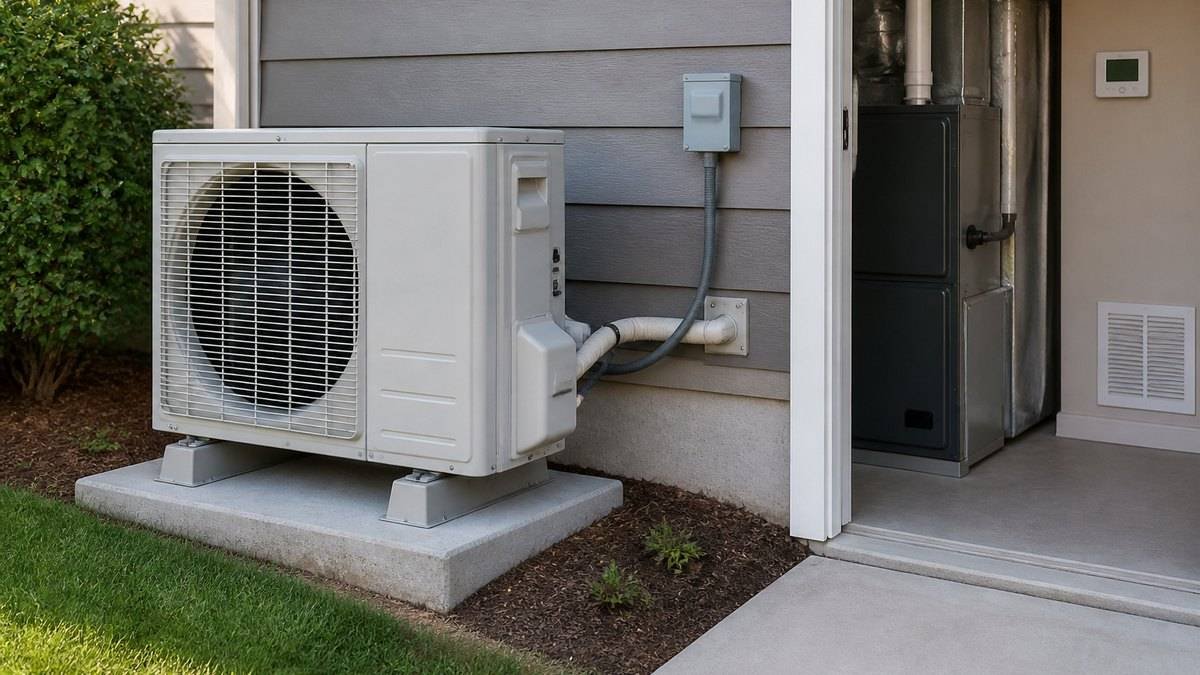
HVAC rebates in 2026 come from three separate places: the federal tax credit for heat pumps, the Inflation Reduction Act’s state-run rebate programs, and utility or state incentives that vary by region. The federal tax credit covers 30% of heat pump costs up to $2,000, but it applies to installations through 2025, which makes 2026 a year of transition.
Understanding the hvac rebates 2026 structure means knowing which layer is live in your state right now.
That timing is the most important fact in this topic. The federal tax credit that many people associate with heat pumps expires for installations after December 31, 2025, while the Inflation Reduction Act’s home rebate programs, which states are rolling out through 2025 and 2026, are becoming the main federal funding path for HVAC upgrades.
The transition is real, and it changes the advice.
Here is every layer, who qualifies, and how to capture what is available now.
The Three Layers of HVAC Incentives
HVAC incentives stack in three layers: the federal tax credit (30% of heat pump cost, up to $2,000), the Inflation Reduction Act’s state-run rebates (up to $14,000 for income-qualified households), and utility or state programs that vary by region.
All three can apply to one installation, though timing and eligibility differ.
The federal tax credit is the simplest: any taxpayer can claim 30% of qualified heat pump, heat pump water heater, or biomass stove costs, up to $2,000, for installations in a principal residence between 2023 and 2025. The credit is claimed on IRS Form 5695 and counts toward the annual $3,200 efficiency-credit cap, details on the IRS credit page.
The IRA rebates are more complex because they run through the states. The Home Electrification and Appliance Rebates (HEAR) program targets households at or below 150% of area median income with up to $14,000 toward electric appliances, and the Home Efficiency Rebates (HOMES) program pays $2,000 to $16,000 based on whole-home energy savings.
Every state is implementing these on its own timeline, which is why availability in 2026 varies widely.
The Federal Tax Credit in 2026
The federal heat pump tax credit applies to installations completed by December 31, 2025, under current law. If you install a qualifying heat pump in 2026, the 30% credit is not guaranteed, because the program’s current authorization ends with 2025 unless Congress extends it.
The practical implication: a heat pump installed in late 2025 locks in the $2,000 credit, while the same unit installed in January 2026 may not.
Contractors and ENERGY STAR’s federal tax credit page both flag this cutoff, and it is the single most common reason people miss the credit.
What still works in 2026 is the credit’s structure for anyone who installed qualifying equipment earlier: 30% of heat pump and heat pump water heater costs up to $2,000, plus up to $1,200 for envelope improvements, with a combined annual maximum of $3,200. If you completed a qualifying installation in 2025, the credit is still claimable on your return.
The Inflation Reduction Act Rebates
The IRA created two federal rebate programs administered by the states: HEAR for electrification and appliances, and HOMES for whole-home efficiency. Both are income-based, both are rolling out on state timelines through 2025 and 2026, and both can be stacked with the federal tax credit where available.
HEAR provides up to $14,000 for households at or below 150% of area median income, covering heat pumps, heat pump water heaters, electric stoves, and electrical panel upgrades, among other measures.
HOMES pays $2,000 to $16,000 for whole-home energy upgrades that achieve modeled or measured savings, with higher amounts for income-qualified households.
The state-by-state rollout is the catch. South Carolina’s energy office, for example, expects its HEAR and HOMES programs to become available in 2026, and many states are at similar stages, so the status in your state is the thing to check, not a national assumption. The DSIRE database tracks state incentives and is the reliable way to see what your state offers right now.
Utility and State HVAC Rebates
Utilities across the country run their own HVAC rebates that are separate from both the federal credit and the IRA programs. Focus on Energy in Wisconsin, for example, rebates smart thermostats, geothermal heat pumps, and variable-speed pumps, with applications due within 60 days of installation and by January 31, 2027.
The amounts and eligibility vary so widely that a national list is useless; what matters is your specific utility and state.
The pattern across programs is consistent though: higher efficiency ratings earn bigger rebates, income-qualified tiers pay more, and most programs require a participating contractor or ENERGY STAR-certified equipment.
The reliable search path is three steps: check the ENERGY STAR rebate finder for your zip code, check the DSIRE database for your state, and ask your contractor whether the specific model you are quoted qualifies for any rebate. Contractors often know the utility programs but do not volunteer the paperwork.
Stacking the Layers for One Installation
A single HVAC installation in 2026 can draw on multiple layers, and the practical question is which combination applies to you. The decision order depends on income, timing, and equipment.
| Layer | Who qualifies | Typical value | 2026 status |
|---|---|---|---|
| Federal tax credit | Any taxpayer, heat pumps 2023-2025 installs | 30%, up to $2,000 | Expires for 2026 installs unless extended |
| IRA HEAR rebate | At or below 150% of area median income | Up to $14,000 | Rolling out by state through 2026 |
| IRA HOMES rebate | Any household; income tiers boost amounts | $2,000 to $16,000 | Rolling out by state through 2026 |
| Utility/state rebate | Utility customers, varies | $50 to several thousand | Year-round, varies by utility |
A realistic example: a household at 120% of area median income replacing a furnace with a heat pump in a state where HEAR is live could see the $14,000 HEAR rebate cover most of the equipment, with a utility rebate adding a few hundred and, if the installation completes before year-end 2025, the federal credit still stacking. For households above the HEAR threshold, the HOMES rebate plus a utility rebate is the typical combination.
Before any of this, an energy audit confirms whether the HVAC system is the real problem or whether sealing and insulation come first. Our home energy audit guide covers the diagnosis, and heat pump rebates and tax credits dives into the heat-pump-specific incentives in detail.
Applying for HVAC Rebates
Applying for HVAC incentives is a paperwork exercise with clear steps, and the key is capturing each layer before its deadline passes.
Start by confirming the equipment qualifies, then work through the applications in order.
- Confirm the model meets the efficiency requirement, such as ENERGY STAR certification or the specific SEER/HSPF rating your state’s program requires.
- Ask the contractor at quote time which rebates apply to that exact model; most will help, some will not volunteer.
- Apply to your utility for its rebate within its window, typically 30 to 60 days after installation.
- Apply to your state’s IRA program (HEAR or HOMES) when it is live, following the state’s application process.
- File IRS Form 5695 for the federal credit if the installation qualifies, keeping receipts and certification documents.
Two documents matter everywhere: the itemized invoice and the manufacturer’s certification statement or ENERGY STAR listing. Keep both for at least three years, and note each program’s deadline, because missed windows are the most common reason applications are rejected.
Common Questions About HVAC Rebates in 2026
These are the most common hvac rebates 2026 questions, answered with the current rules for each layer.
Are there any tax credits for new HVAC in 2026?
Under current law, the federal heat pump tax credit applies to installations through December 31, 2025, and its 2026 status depends on whether Congress extends it. The Inflation Reduction Act’s state-run HEAR and HOMES rebates are the main federal funding path in 2026.
Are there any federal rebates for HVAC?
Yes: the Inflation Reduction Act created HEAR (up to $14,000 for households at or below 150% of area median income) and HOMES ($2,000 to $16,000 for whole-home upgrades). Both are administered by the states and are rolling out on state timelines through 2026.
Will HVAC prices go down in 2026?
Price direction depends on the model, efficiency tier, and supply, and no reliable prediction covers the whole market. What is predictable is the incentive side: rebates and credits change by year, so checking your state’s current programs matters more than guessing at prices.
How can I get a free HVAC system from the government?
There is no program that gives away HVAC systems outright. The closest is the Weatherization Assistance Program, which repairs or replaces heating systems at no cost for income-qualified households, and the IRA rebates, which can cover most but not all of a heat pump’s cost.
What HVAC rebates exist in California?
California’s IRA programs and utility incentives are among the largest in the country, with HEAR and HOMES coverage plus utility-specific heat pump rebates. Check the DSIRE database and your utility’s efficiency page for the current amounts in your area.
What HVAC rebates exist in New Jersey?
New Jersey runs its own efficiency programs alongside the IRA rebates, with utility and state incentives for qualifying heat pumps and HVAC upgrades. The current list is on the state’s energy office site and the DSIRE database.
Capture What Is Live, Plan for What Is Coming
The 2026 HVAC incentive picture is a transition: the familiar federal tax credit is expiring for new installs, and the IRA state rebates are arriving on staggered timelines. The practical strategy is to capture what is live in your state and time the installation to stack as many layers as possible.
Start with the energy audit to confirm the equipment is the right priority, then check DSIRE and your utility for current rebates, and ask your contractor which of them apply to the exact model quoted. If a qualifying heat pump installation can complete before year-end, the $2,000 federal credit is still there.
The combination, not any single program, is what makes an HVAC upgrade affordable in 2026.