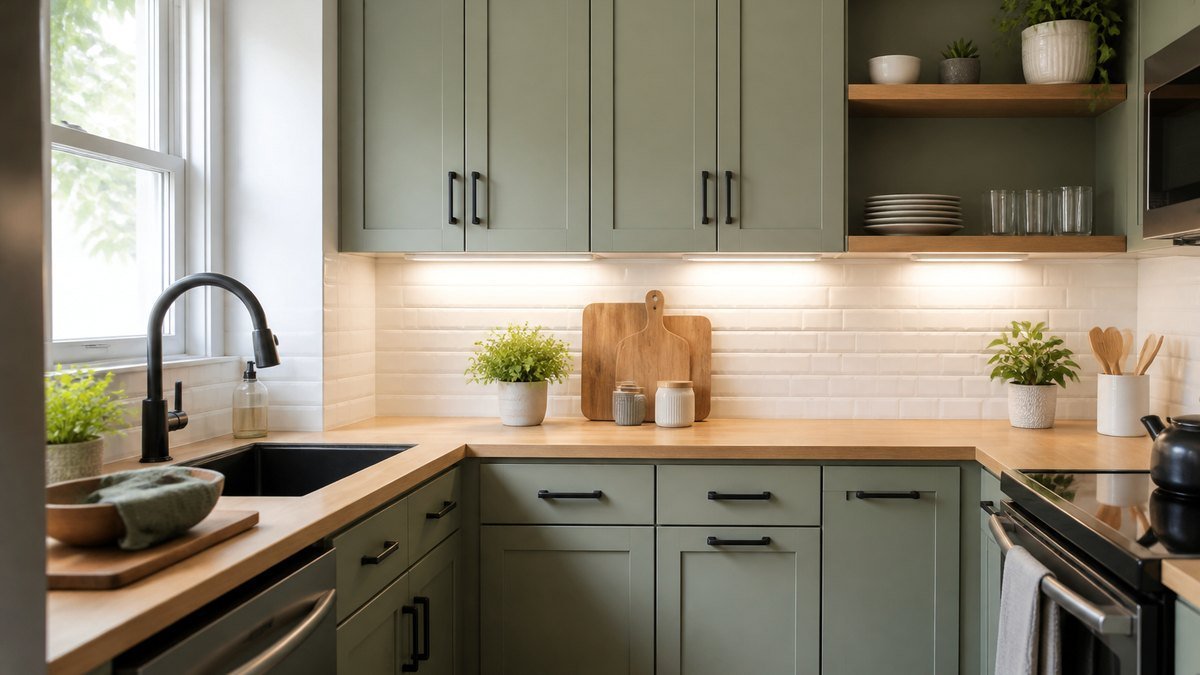
A kitchen makeover on a budget works when you keep the layout and change the surfaces: paint the cabinet doors, swap the hardware, refresh the backsplash and lighting, and the room looks entirely different for $500 to $2,000. The full renovation that most people imagine costs $30,000 or more, but the makeover version starts at a few hundred dollars.
Every version of a makeover kitchen on a budget follows the same surface-first rule, whether you spend $200 or $8,000.
The rule that makes it work: never move the plumbing or the walls. Keeping the layout means the expensive parts, the sink, stove, and cabinets, stay put, and every dollar goes to the surfaces people actually see. That is the difference between a makeover and a remodel.
Here is how to plan it, what each upgrade costs, and the order that makes a small budget look large.
Why Surface Changes Beat Structural Ones
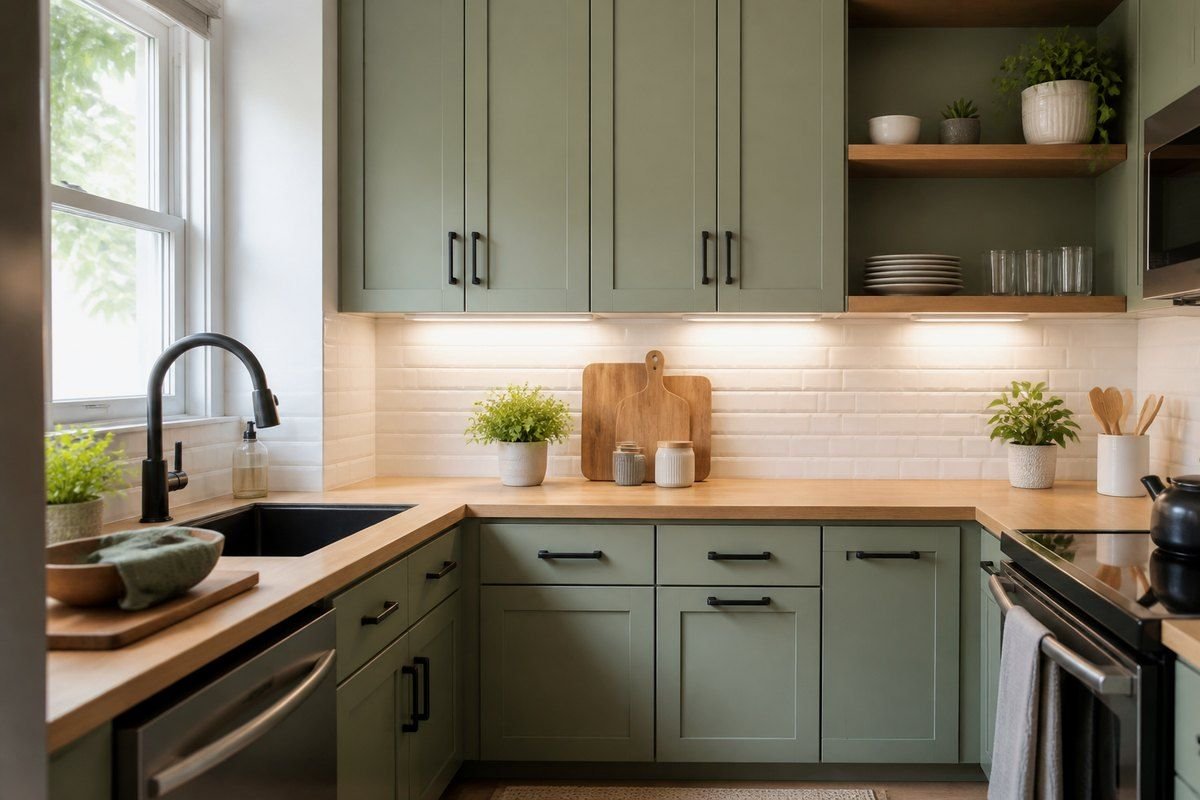
Surface upgrades deliver most of the visual impact at a fraction of the cost because the eye lands on color, hardware, and texture before it notices layout. Painting cabinets, swapping handles, and updating the backsplash change how the room reads without touching the expensive bones.
The numbers make the case. Cabinet refacing or refinishing typically costs far less than replacing the cabinets, and a can of paint plus new hardware can refresh a whole run of cabinets for $100 to $300. Home improvement stores like Lowe’s describe a full refresh for under $1,200, and Better Homes and Gardens has built entire budget makeover lists under $2,000.
Renters get the same principle in reverse: peel-and-stick backsplash, removable wallpaper, and a new faucet are all reversible, which is why the rental-friendly version of a makeover follows the same surface-first logic without the permanent changes. Ready-to-assemble cabinet fronts and budget storage from retailers like IKEA give owners another low-cost layer for a fresh look.
Budget Tiers: What Each Amount Buys
Kitchen makeover budgets fall into recognizable tiers, and knowing which tier you are in sets realistic expectations. The four tiers below cover everything from a weekend refresh to a full small-kitchen renovation.
| Budget | What it covers | Source |
|---|---|---|
| $0 to $50 | Decluttering, styling shelves, rearranging a coffee corner, repainting one accent | HGTV’s free-and-cheap updates |
| $500 to $2,000 | Cabinet paint, hardware, lighting, peel-and-stick backsplash | Daitool’s light-cosmetic tier; Lowe’s under $1,200 |
| $2,000 to $5,000 | Adds countertop refresh, deeper cabinet work, new sink or faucet | Better Homes & Gardens under $2,000; PAA small-kitchen range |
| $5,000 to $10,000 | Small-kitchen refacing or full cosmetic renovation, new appliances in part | PAA $5,000 answer; A Stroll Thru Life’s $7,000 full makeover |
The middle tiers overlap in practice. A $500 makeover and a $1,200 makeover often buy the same list of projects, just at different quality levels of materials, and a $2,000 budget stretches furthest when you do the labor yourself. The PAA guidance confirms the floor: $5,000 can cover a small kitchen under ten cabinets, and $10,000 is genuinely enough for a strategic cosmetic remodel.
Whatever the tier, plan a contingency buffer of 10% to 15% of the budget for unexpected costs like delivery fees or a damaged backsplash tile, which is standard advice in the budget-makeover guides. That buffer is what keeps a makeover kitchen on a budget from becoming a budget overrun.
The Highest-Impact Projects, Ranked
Not every upgrade earns its place in a budget makeover, and the ones that do share a trait: they cover the most visible surface for the least money. Ranked by impact per dollar, the list is consistent across the budget-makeover guides.
| Project | Typical cost | Impact |
|---|---|---|
| Paint cabinet doors | $50 to $200 | The single biggest visual change; redefines the room |
| Swap cabinet hardware | $30 to $100 | Modernizes every door and drawer instantly |
| Peel-and-stick backsplash | $50 to $200 | Replaces dated tile look without demolition |
| Update lighting fixtures | $50 to $150 | Changes the whole mood; under-cabinet lights help most |
| Refinish or replace countertops | $150 to $800 | Laminate or butcher block reads as a major upgrade |
| New faucet | $80 to $250 | Fresh focal point at the sink, easy DIY swap |
Cabinet painting deserves the top spot for a reason: it is the highest-impact-to-cost ratio in the entire makeover playbook. Removing the doors, sanding, priming, two coats of paint, and a protective topcoat changes the kitchen’s identity, and the whole job costs less than one new door. The tradeoff is time, roughly three days including drying, during which the cabinets are out of service, which is the real cost people underestimate.
Hardware is the fastest win. Replacing dated knobs and pulls on all the doors and drawers is an afternoon project for $30 to $100, and it immediately modernizes the look because hardware is the detail the eye checks first.
The 7-Step Execution Order
Do the projects in an order that keeps the kitchen usable and avoids redoing work: clear out first, then work top-down and back-to-front. The sequence below matches how the budget-makeover guides recommend stacking the work.
- Clear and declutter. Empty the counters, sort the drawers, and donate or discard what you have not used in a year. This is free and instantly improves the room.
- Paint the cabinets. Remove the doors, sand, prime, paint, and topcoat, working in batches so half the kitchen stays usable.
- Swap the hardware. Install the new knobs and pulls on the refinished doors and drawers.
- Install the backsplash. Apply peel-and-stick tile or paint over the existing backsplash, working from the counter up.
- Refresh the countertops. Add laminate, butcher block, or a refinishing kit, or simply deep-clean and seal existing surfaces.
- Update the lighting. Replace dated fixtures and add under-cabinet lights for task lighting.
- Style the space. Add a rug, plants, and styled open shelves, which HGTV’s free-tier updates show can be done for $0.
The order matters for two reasons. Working top-down keeps paint and dust off finished surfaces, and doing cabinets before hardware means the new pulls sit on fresh paint. The styling step at the end is where the room goes from renovated to designed, and it is the cheapest step of all.
Renter-Friendly vs. Owner Projects
Renters and owners face different rules, and the makeover playbook splits accordingly. Owners can paint, reface, and permanently upgrade; renters need reversible projects that come out clean at move-out.
Renter-friendly options include peel-and-stick backsplash, removable wallpaper, a swap-in faucet kept in a box for the original, and new cabinet hardware saved for reinstallation later. All of these change the look dramatically and reverse in an afternoon, which is why the renter-friendly home upgrades and rental kitchen makeover guides treat them as a category of their own.
Owners have the fuller menu: cabinet refacing or paint, countertop replacement, and permanent lighting changes. The owner’s version of the same budget goes further because the changes add to the home’s value rather than walking away with the tenant. Our small kitchen makeover ideas cover the compact-space specifics, and the cheap flooring ideas guide handles the floor layer when your budget reaches it.
Budget Makeover Mistakes to Skip
Three mistakes waste budget-makeover money. The first is upgrading one expensive item, like an appliance or a window, while the cabinets stay dated, because the eye lands on the largest surface, not the newest gadget. The second is skipping prep on painted cabinets, which guarantees peeling within a year. The third is buying new everything instead of mixing new hardware with refinished surfaces.
The appliance trap deserves emphasis. A new refrigerator changes one corner; painted cabinets and new hardware change the whole room. Budget makeover guides consistently rank the cabinet work above appliance replacement for impact per dollar, and the 2026 kitchen trends, smarter layouts and warm materials, are about surfaces and storage, not appliances.
That ranking is the core of the makeover kitchen on a budget philosophy.
Finally, pace the work. A makeover does not have to happen in one weekend, and spreading it across three weekends with the highest-impact projects first keeps the kitchen usable and the budget realistic. That is also where the beginner DIY repairs guide and the budget home maintenance checklist become useful, since several of these projects are safe first DIY jobs. If the exterior is next on your list, the cheap curb appeal ideas guide carries the same surface-first logic outside.
Common Questions About Budget Kitchen Makeovers
What is the cheapest way to redo your kitchen?
Keep the layout and change the surfaces: paint the cabinets, swap the hardware, install a peel-and-stick backsplash, and update the lighting. This approach costs $500 to $2,000 and delivers most of the visual impact of a full remodel.
Is $10,000 enough for a kitchen remodel?
Yes, for a cosmetic remodel. $10,000 covers new countertops, a modern backsplash, updated hardware, and often new appliances in part, which are the upgrades buyers notice most. It is not enough for structural changes or a full cabinet replacement.
Can I remodel my kitchen for $5,000?
Yes, for a small kitchen under about ten cabinets, where $4,000 to $5,500 covers refacing or a full cosmetic renovation with standard materials. A medium kitchen is tighter and may require cheaper door styles or DIY prep work.
What is the new look for kitchens in 2026?
Kitchen design in 2026 favors smarter layouts, built-in storage, warm materials, and flexible features over trend-chasing. The practical takeaway for a budget makeover: warm wood tones, styled open shelves, and good task lighting align with the direction.
How do I update kitchen cabinets on a budget?
Paint them: remove the doors, sand, prime, two coats of paint, and a topcoat, at a cost of $50 to $200. Swapping the hardware for $30 to $100 finishes the refresh, and both are DIY-friendly.
Do the same principles apply to a bathroom?
Yes. Keeping the layout and refreshing surfaces, paint, hardware, lighting, and fixtures, works the same way in a bathroom. Our budget bathroom makeover and small bathroom makeover guides apply the same playbook room by room.
The Order, Not the Amount, Makes the Makeover
A budget kitchen makeover succeeds on sequence: paint the cabinets, swap the hardware, refresh the backsplash and lighting, and style the space last. That order turns $2,000 into a room that reads like a $10,000 renovation, because the eye sees surfaces, not budgets.
Set the tier first, plan a 10% to 15% buffer, and start with the highest-impact project, the cabinet paint. Renters use the reversible playbook; owners can go a step further with countertops and permanent lighting.
The kitchen you have is already the right layout; the makeover just changes what you see when you walk in.