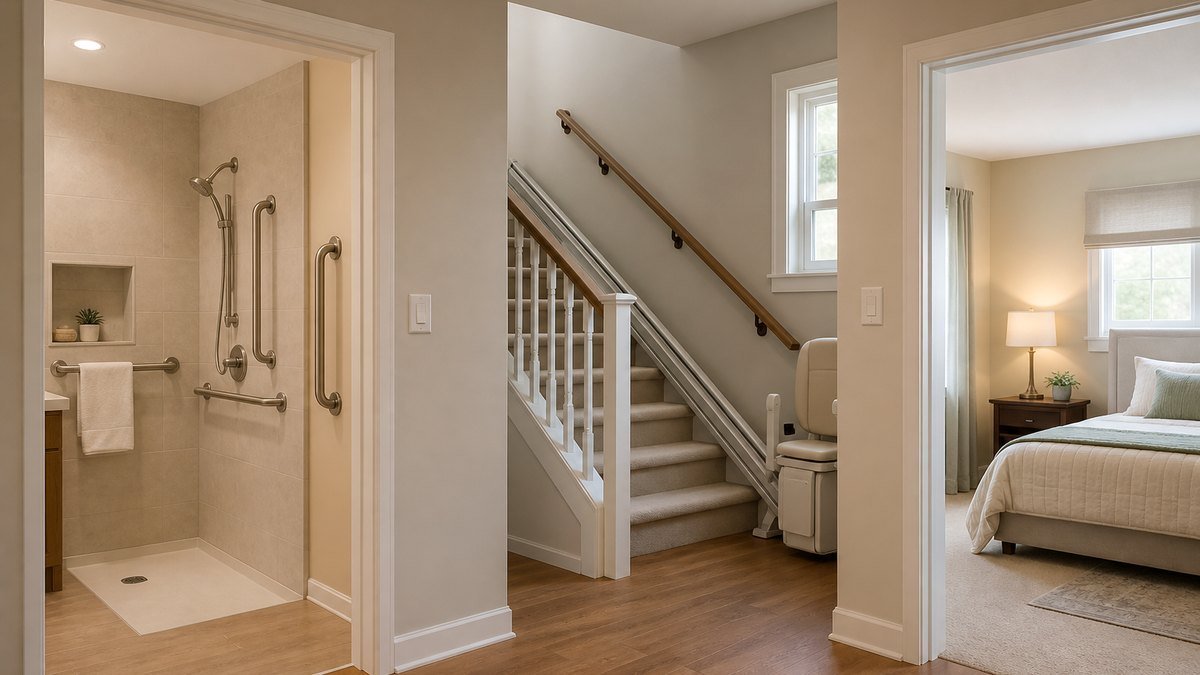
The VA, USDA, and Medicaid fund most grants for home modifications for disabled people. Veterans with service-connected disabilities get the largest awards, the USDA Section 504 program serves rural low-income owners, and state Medicaid waivers pay for medically necessary changes in many states. The rest is loans, nonprofit labor, and local programs.
Free money is rare, and the word “grant” gets used loosely. A true grant never comes back for repayment. Many “free government grants for home modifications” ads are loan pitches or outright scams, so knowing the real list matters.
One detail most applications miss: the photo of the unmodified area. It costs nothing and it is the step people skip, yet it is a required document in more than one program below.
VA grants and loans for disabled veterans
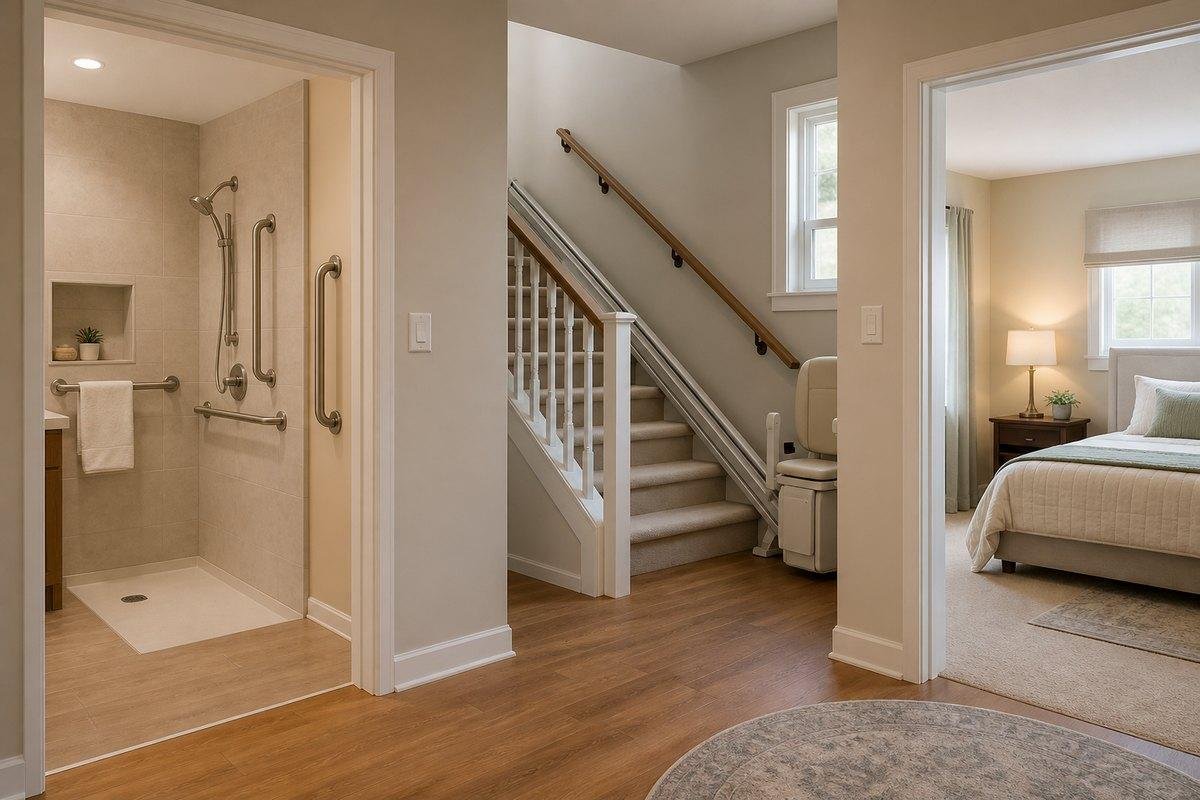
Disabled veterans have the strongest home modification funding in the country. The Specially Adapted Housing grant pays up to $126,526 in fiscal year 2026, the Special Home Adaptation grant up to $25,350, and the Home Improvements and Structural Alterations grant adds lifetime money for medically necessary work. The figures come straight from the VA disability housing grants page.
SAH money buys, builds, or changes a permanent home you own. Eligibility turns on the specific disability, not a rating percentage: loss or loss of use of more than one limb, blindness at 20/200 or worse, certain severe burns, and a post-9/11 lower-extremity loss that blocks walking without braces or a wheelchair. A 100% rating alone does not qualify, and Congress caps the post-9/11 limb-loss category at 120 grants per fiscal year.
SHA covers a different list: loss of both hands, certain burns, certain respiratory injuries. TRA is the temporary-residence version, for a veteran living in a family member’s home, with its own yearly maximum. The VA adjusts all three amounts each October.
Separate from the housing grants, the Home Improvements and Structural Alterations program runs through VA medical centers and pays for ramps, bathroom and kitchen access, and the plumbing or electrical work a medical device requires. It is a lifetime benefit: $6,800 for service-connected needs, $2,000 for other cases. HISA will not fund new construction, a hot tub, exterior decking, or routine repairs like a roof or furnace, and portable ramps and stairlifts are excluded too.
| VA program | Who qualifies | Maximum | What it pays for |
|---|---|---|---|
| Specially Adapted Housing (SAH) | Service-connected limb loss, blindness, severe burns | $126,526 (FY 2026) | Buy, build, or adapt a permanent home |
| Special Home Adaptation (SHA) | Loss of both hands, certain burns and respiratory injuries | $25,350 (FY 2026) | Adapt a permanent home |
| Temporary Residence Adaptation (TRA) | SAH or SHA qualified, living in a family member’s home | $50,961 (SAH-based) or $9,100 (SHA-based) | Adapt the home where you live temporarily |
| HISA | Service-connected disability, or 50%+ rating for non-service-connected need | $6,800 or $2,000 lifetime | Ramps, bathroom and kitchen access, medical-equipment plumbing |
These are the programs behind the “disabled veteran grants for home improvement” search, and they are the reason veterans should apply through the VA before looking anywhere else. Each grant needs its own application, and the four can be layered, since the housing grants and HISA serve different purposes.
USDA Section 504: the loan that keeps getting misdescribed
The USDA Section 504 program loans up to $40,000 at a fixed 1% rate for 20 years to very-low-income homeowners in rural areas, and adds a grant of up to $10,000 for owners age 62 or older. Combined funding caps at $50,000, and the loan itself has no age limit.
The age rule is where most write-ups go wrong. The 62-and-up requirement belongs to the grant only. The loan is open to any very-low-income rural owner, whatever their age, and 7 CFR 3550.102 lets the money go toward remodeling a home so it is usable by a household member with a disability. That makes Section 504 one of the few modification channels that does not require a disability determination, an income test stands in its place.
The grant side is narrower: it exists to remove health and safety hazards, which is how a failing ramp or a bathroom someone cannot use safely qualifies. Applications run through the local USDA Rural Development office, and the county very-low income limit sets the eligibility line.
Worth repeating because it changes the decision: a rural family with a disabled child under 62 can still get the 1% loan, just not the grant. The loan term of 20 years at 1% beats any private credit card or personal loan for the same purpose.
Medicaid waivers and state funding channels
Medicaid’s Home and Community-Based Services waivers can pay for ramps, bathroom adaptations, and similar modifications in most states, but the coverage lives in each state’s waiver, not in a national rule. Eligibility runs through the state Medicaid agency or an enrollee’s case manager, and the services differ from state to state.
The mechanism matters: under a 1915(c) waiver, states can propose “other” services beyond the standard list, and home modifications are typically approved that way when the state shows they keep someone out of an institution. In practice that means a case manager can often arrange a bathroom remodel or an entrance ramp that no federal grant covers, and the program does not care whether the applicant was ever in the military.
Two questions to ask the case manager directly: does this waiver include home modifications, and is there a dollar cap per enrollee per year. Some states cap the modification spend, some require a physician to document that the change prevents institutionalization, and the answers decide whether the project is realistic.
Children are covered by the same logic.
States like Illinois run dedicated channels such as the Division of Specialized Care for Children, which funds modifications and assistive technology for kids with qualifying conditions. For families adapting a bedroom or bathroom for a child on the spectrum, the sensory bedroom ideas for autistic children guide shows what those changes look like before the paperwork starts.
Nonprofits, loans, and the order that works
When no grant fits, nonprofit labor and low-interest loans carry the project. Rebuilding Together affiliates install ramps, widen doors, and modify bathrooms at no cost for income-eligible households, and Habitat for Humanity affiliates build and repair for owners up to roughly 80% of the area median income, with disabled homeowners and veterans on priority lists. Both are affiliate-driven, so the local office sets the waiting list.
Loans fill the gap above the income lines. State housing finance agencies and some credit unions offer accessibility loans with below-market rates, and an FHA 203(k) mortgage rolls modification costs into a purchase or refinance. Crowdfunding works but carries a real risk: money raised through a for-profit platform lands directly in the applicant’s account, which can complicate asset-based benefits like Medicaid. A nonprofit fundraiser such as Help Hope Live administers the funds instead, which usually keeps benefits intact, though it is worth confirming with a benefits office.
Before any of it, decide which rooms actually matter. The aging-in-place home modifications walkthrough goes room by room and keeps a project from ballooning into work nobody uses. Scope first, then match the funding, because no single program pays for a whole house.
For disabled persons who do not fit the VA or rural boxes, the same channels serve as “home improvement grants for disabled persons” in practice: the state waiver, the local CIL, and the nonprofit affiliate. Apply in that order. A dead end at one office is often a referral at the next, so the sequence matters more than any single application.
The paperwork that actually gets approved
Every modification grant application runs on the same four documents: proof of the disability or income basis, a physician’s or case manager’s statement of medical necessity, an itemized contractor estimate, and photos of the area to be changed. Assemble these before calling anyone.
The VA’s HISA list is the strictest and a good template. It wants a prescription written or approved by a VA physician, a signed VA Form 10-0103, a written itemized estimate of labor, materials, permits, and inspections, a color photograph of the unmodified area, and, for renters, a notarized statement from the owner. An on-site inspection may follow.
Sequence matters as much as completeness.
Confirm eligibility for the specific program first, gather the documents, then call the office that runs it. Medicaid applicants start with the case manager, not a portal. USDA applicants start with the local Rural Development office.
One more thing before you spend anything: Medicare does not pay for structural modifications, and no amount of documentation changes that, so it should never be part of the plan. What you do pay out of pocket can reduce your taxes, because the IRS lets you deduct unreimbursed medical expenses above 7.5% of adjusted gross income, and accessibility improvements to a home can count as medical care under IRS rules on medical and dental expenses. Keep every receipt and ask the doctor for a letter tying the work to the disability.
Common questions, straight answers
What kind of grants can a disabled person get?
Three real grant families exist: the VA’s SAH, SHA, and HISA grants for veterans with qualifying service-connected disabilities; the USDA Section 504 grant for rural owners 62 and up with very-low income; and Medicaid HCBS waiver funding for medically necessary modifications in participating states. Nonprofit programs like Rebuilding Together add free labor for eligible households.
Is there a grant for home modifications?
Grants for home modifications for disabled people exist, but only for specific groups. Veterans with service-connected disabilities qualify for SAH, SHA, or HISA grants. Rural homeowners 62 and up with very-low income can get a USDA grant up to $10,000. Medicaid waiver enrollees in most states can get modifications through their case manager. Outside those groups, grants are scarce and loans or nonprofit labor fill the gap.
What is the USDA 504 home repair program?
The Section 504 Single Family Housing Repair program loans up to $40,000 at 1% fixed interest for 20 years to very-low-income rural homeowners, with a $10,000 grant added for owners 62 and older. The loan has no age limit, and the money can remodel a home for accessibility as well as fix hazards.
Does Medicare pay for home modifications for seniors?
No. Medicare Part A and Part B do not cover structural modifications like ramps, widened doorways, or bathroom remodeling, because those are not durable medical equipment. Seniors should look to Medicaid waivers, the USDA 504 loan, state and local programs, and nonprofits instead.