A sensory bedroom starts with subtraction, not equipment. Strip the visual and auditory noise first, then add the two or three tools your child actually uses. Sleep is the room’s job; a playroom is where the gear belongs.
The distinction matters because most “sensory room” advice assumes a dedicated space with a budget. A bedroom is smaller, shared with sleep, and open all night. The autism sensory bedroom ideas that actually hold up are the quiet ones: fewer colors, softer light, less sound, and hardware that makes the room safe to leave a child in.
The subtractive pass before you buy anything
Start by removing, not adding. Clear surfaces, swap busy patterns for plain walls, close away toys at bedtime, and cut the number of wall decorations. A calmer base makes every tool you add later work harder.
Visual clutter is the most common hidden stimulant in a child’s bedroom, and it is free to fix. Covered bins or closed shelving do what an open toy shelf cannot: at bedtime the room stops shouting. Neutral paint on the walls, plain bedding, and one or two favorite posters beat a themed room that never switches off.
Watch where the child settles first. Most kids on the spectrum have one corner or one chair they retreat to when overloaded; that spot tells you the light and texture they are actually seeking.
Design around that corner, not around a catalog.
Light and sound: the two inputs that decide sleep
Blackout curtains, a warm low-watt lamp, and steady white noise solve more sleep problems than any gadget. Keep light sources dim and adjustable, and treat flashing lights with caution: the Epilepsy Foundation notes that about 3% of people with epilepsy have seizures triggered by flashing light.
Bedroom lighting should follow the day, bright and natural in the morning, dim and warm toward bedtime. Blackout curtains are the single highest-value purchase, and the budget version works: a tension rod with a clamp-on curtain panel, plus a strip of velcro to seal the light gaps at the edges, runs under $25. Nightlights stay low and amber-toned rather than white or blue. A cheap dimmer switch on the overhead light gives the child control over the room, which is often half the battle.
Sound is more personal. Some children sleep better with a white noise machine or a fan, others need silence and a closed door; the only way to know is to test both for a week. What does not belong in a sleep space is unpredictable audio, like a tablet left playing.
Bubble tubes and light columns are the sensory-room fixtures every competitor article shows, and they are genuinely calming for many children. They also flash and flicker, which matters if the child has or might have seizures. Run that choice past the child’s neurologist before installing one, and skip strobe-style effects entirely.
Deep pressure and movement that stay in the room
Weighted blankets, body socks, and crash pads deliver the deep-pressure input many autistic children seek, but they are tools with rules: introduce them under an occupational therapist’s guidance and never as an unsupervised sleep shortcut. Swings need a structural mount, not drywall anchors.
A weighted blanket is the item parents ask about most. There is no single official weight or age rule to quote, which is exactly why the choice belongs with an occupational therapist who knows the child. What the therapist will weigh: the child’s size, sensory profile, and whether the blanket stays on at night or becomes a tangle hazard.
Movement equipment earns its place only if the child uses it before sleep to regulate. A crash pad or body sock in a corner gives a safe landing spot; a hammock or swing can work the same way, but a swing’s ceiling mount must reach a joist, and a professional install is the standard. One sensory-room build published by Autism Parenting Magazine had the swing installed by a neighbor who reinforced the ceiling, a reminder that this is structural work.
If the child needs hard proprioceptive input, jumping or climbing, keep that equipment out of the bedroom and in a play space. The bed should stay a place to sleep, not the trampoline.
Safety first: the facts that change the layout
Two sets of official numbers decide the bedroom layout. The Consumer Product Safety Commission counts about 11,300 children treated in emergency rooms each year for furniture and TV tip-overs, and 46 reported child deaths from window-blind cords between 2014 and 2019. Anchor tall furniture to the wall and use cordless window coverings.
The Anchor It! campaign reports that 77% of tip-over deaths were children under 6, 91% happened at home, and 73% involved climbing. Dressers, bookshelves, and TVs get anchored to studs, not just pushed against the wall. The CPSC’s Go Cordless guidance is blunt: cordless window coverings are the only option that eliminates the strangulation hazard, and the cords on older blinds are worth removing before anything else in the room.
Elopement changes the door and window plan. The National Autism Association reports that roughly half of children with autism, 49%, attempt to leave a safe environment, nearly four times the rate of their siblings, and that 71% of elopement-related deaths in its six-year study were accidental drowning. For a child who wanders, the bedroom needs locks a child cannot defeat from inside, window locks, and a door alarm at night. If water is nearby, this is the fact that justifies the hardware: autism safety data shows drowning risk for children with autism roughly 160 times that of typical peers.
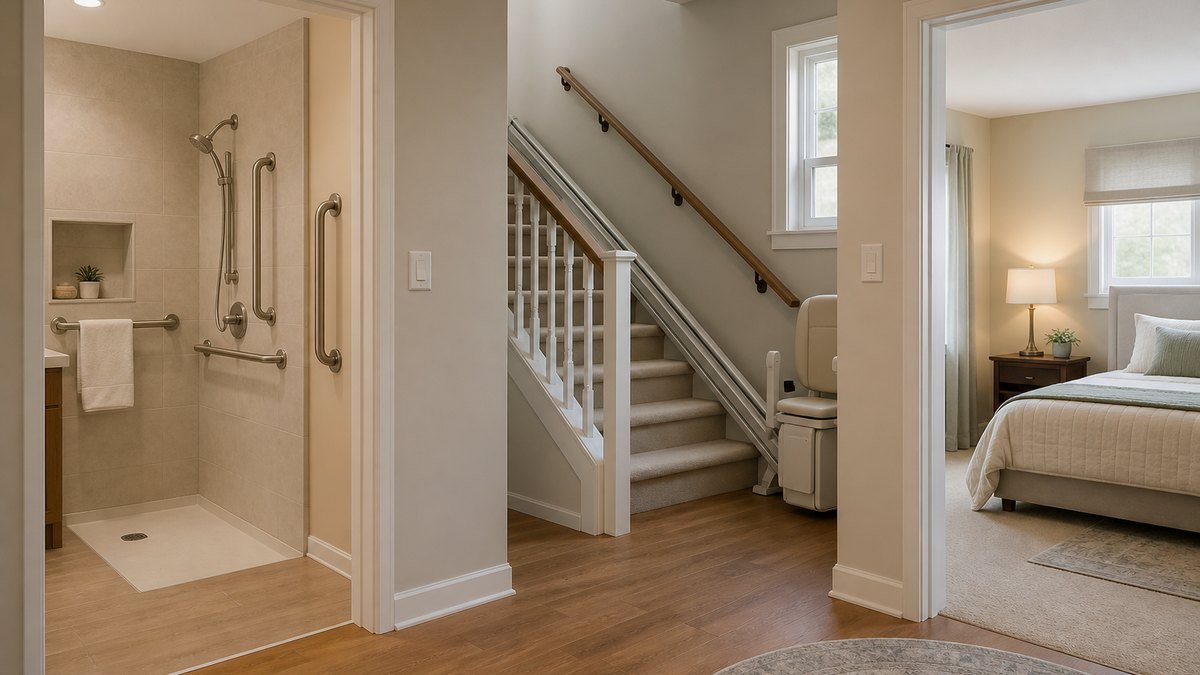
An upstairs bedroom adds stairs to the safety picture. Families weigh moving the sleep space downstairs against pricing a stair lift, and the cost breakdown covers purchase and installation. A room that may eventually need wheelchair access belongs in a whole-home plan; the aging-in-place home modifications walkthrough maps the room-by-room approach.
The DIY budget pass
A working sensory bedroom does not need specialty catalogs. One parent’s published build used a $120 bubble tube, $60 acrylic mirrors, and a $17 black light, all bought retail, and the cheapest fixes cost nothing: tension-rod curtains, a blanket fort, a rice bin.
The zero-dollar layer comes first: clear the floor, cover the toy shelf, block the light gaps, and test the corner the child already chose. The under-$50 layer adds a blackout panel, a low warm lamp, a rice or pasta sensory bin with a tray under it, and a pop-up tent or blanket fort the child can retreat into.
Specialty equipment sits at the top of the ladder, and the rule is to buy one thing at a time. Watch how the child uses it for two weeks before the next purchase. A bubble tube that gets ignored for a month was not the right tool, and no amount of cataloging changes that. Most autism sensory bedroom ideas on a DIY budget stop at the blackout curtain and the bin, and that is often enough.
Common questions, straight answers
How do you make an autism friendly bedroom?
Reduce visual and auditory noise first: blackout curtains, plain walls, closed toy storage, warm low light, and steady white noise. Those are the autism sensory bedroom ideas with the largest effect per dollar. Then add one sensory tool at a time, watch how the child uses it, and keep the bed a place to sleep rather than a play surface.
What should I put in a sensory room for autism?
Start with soft adjustable light, deep-pressure options like a weighted blanket or crash pad under occupational therapy guidance, and one tactile or visual tool the child is drawn to. A bubble tube, fiber-optic lights, or a sensory bin each work, but only if the child actually uses them.
Is a sensory bedroom the same as a sensory room?
No. A sensory room is built for stimulation and regulation during the day. A sensory bedroom is built for winding down and sleeping, so it uses fewer inputs: dimmer light, less sound, fewer toys visible, and safety hardware that a daytime room does not need.
Are weighted blankets safe for autistic children?
They are a common deep-pressure tool, but there is no single official weight or age rule, so an occupational therapist should guide the choice for the specific child. They are not a substitute for a safe-sleep setup, and a blanket that slips off or overheats at night is the wrong one.