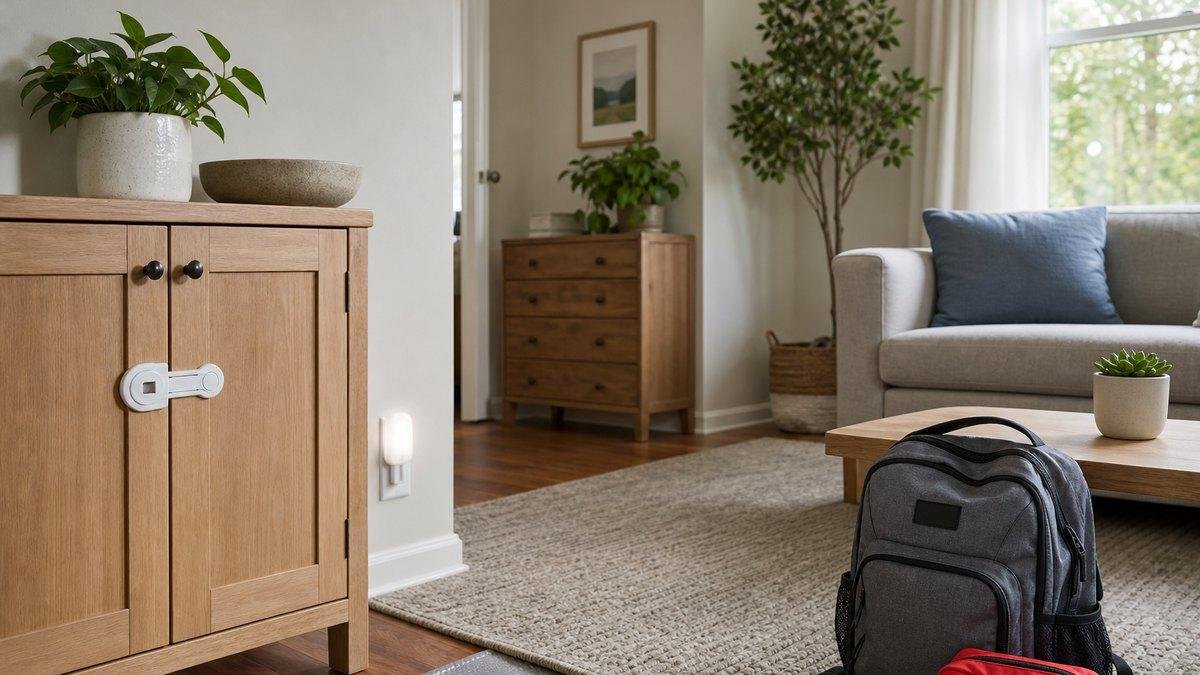
Home safety and security are two different jobs. Safety prevents accidents, and security prevents crime, and the two checklists barely overlap. The security side runs on a layering principle: lighting, locks, doors and windows, alarms, and habits, in that order of cost and effect.
The statistics frame the security question without fear. The FBI’s national clock counts a burglary every 20.9 seconds, and the average residential intrusion takes about 2 minutes and 55 seconds, according to the FBI’s burglary data. Most burglaries are opportunity-driven, happen during the day, and choose the easiest house on the street, which is exactly why habits outrank hardware.
The safety and security at home checklist runs the layers in order, then the away-and-vacation routine, and ends with the safety-versus-security split that keeps the two jobs from being confused.
Safety versus security: two checklists, one home
Safety prevents accidents: falls, fires, poisonings, and the hazards the other articles in this series cover. Security prevents crime: burglary, theft, and intrusion. A home can be safe and insecure at the same time, or secure and unsafe, which is why the two checklists run separately.
The safety checklist covers smoke alarms, carbon monoxide detectors, stair rails, grab bars, and kitchen fire prevention, all covered in the home safety checklist. The security checklist below covers the physical layers that deter crime, and neither list substitutes for the other.
Most families finish the safety list and assume the security list is covered, or install an alarm and stop locking windows. The home emergency preparedness checklist covers the third list, for disasters, and the three together are the complete home protection system.
Layer one: lighting and visibility
Lighting is the cheapest security layer and the first one burglars notice. Motion-activated lights at the front door, back door, and garage, and along walkways, remove the darkness that covers an approach. The effect is deterrence, not surveillance: a house that lights up when someone steps onto the property is a house that announces its own motion detection.
Indoor lighting on timers or smart bulbs makes an empty house look occupied in the evening, which matters because most residential burglaries happen during the day when the house is visibly empty. The timer lights turn on and off in the rooms a person would use, not the whole house at once.
Visibility is the second half of the layer. Trim shrubs and trees that hide doors and windows, keep the walkways clear, and keep valuables out of sight from the street, because the burglar scouts before entering and the visible television or bicycle is the invitation.
Layer two: doors and locks
The door layer is where most homes are weakest, and the fixes are cheap. Every exterior door needs a deadbolt with a minimum one-inch throw, a strike plate anchored with long screws into the door frame, and a door frame solid enough to hold it. A kicked-in door is the most common forced entry, and the strike plate screws are what stop it.
Change the locks on move-in, and rekey or replace them when keys change hands, because the spare key given to a contractor or a previous owner is a key that still works. Never hide spare keys under doormats, planters, or rocks, because the hiding spots are as well known as the locks.
Sliding glass doors need the security bar or dowel in the track, or a floor-mounted lock, because the standard latch lifts open from outside. Install a peephole or doorbell camera at the front door so callers are seen before the door opens, and check the door’s hinges, which on outward-opening doors are an entry point if the hinge pins are exposed.
Layer three: windows and the garage
Windows are the second-most common entry point after doors, and the checklist is short. First-floor windows need locks that actually hold, and the open-at-night rule: windows that stay open in summer need a pin or lock that stops them from opening wide enough to enter. Window security film adds a layer that slows glass breakage.
The garage is the overlooked entry: a garage door opener left in a car that was not locked, or a service door left open, gives access to the house through the garage. Keep the service door locked, the opener out of the car when parked outside, and the garage-to-house door secured like an exterior door, because it is one.
Outdoor equipment belongs in the security plan too: grills, mowers, and bicycles locked and out of sight, because BJS burglary data shows the median value of items lost in residential burglaries was around $600, and the outdoor items are the easiest grab.
Layer four: alarms, cameras, and the habits that beat both
Alarms and cameras are the visible layer, and the Tufts University police guide frames them correctly: a visible alarm system deters, and a monitored one responds. Doorbell cameras cover the front door, the most common approach, and interior cameras cover the rest. The sign or sticker alone, without a working system, is security theater that an informed burglar ignores.
The habits layer is the one that actually decides whether the home is targeted, and it is free.
Lock the door every time, not when you remember. Close and lock windows before bed and before leaving. Arm the alarm every time it exists. Verify the door is locked after contractors or movers leave. And do not let the routine slip on the days nothing seems at risk, because those are the days burglars count on.
The data backs the habits: most residential burglaries are daytime, opportunity-based, and avoid occupied homes and homes with visible security. A burglar who sees a locked house with a camera and a barking dog moves to the next house, which is the entire goal. The occupancy signal is the strongest deterrent a household controls, which is why the away routine matters as much as the locks.
The away and vacation routine
An empty house advertises itself, and the away routine removes the advertisement. Hold mail and newspapers or ask a neighbor to collect them, arrange snow removal or lawn mowing so the house does not look dormant, and never post travel plans or vacation photos until the trip is over.
Package delivery is the modern giveaway: schedule deliveries, require signatures, or use a locker, because porch theft announces both the package and the empty house. Use light timers that follow a normal evening pattern, and ask a trusted neighbor to watch for flyers and activity.
The home inventory belongs in the same routine: a dated photo or video walk-through of each room and its contents, kept off-site or in the cloud, because it is the document that makes insurance claims after theft or fire.
Frequently asked questions
What are the 5 safety rules at home?
The five core safety rules: keep smoke alarms working on every level and test them monthly, never leave cooking unattended, keep space heaters and candles away from anything flammable, store medications and cleaners locked up, and keep floors, stairs, and walkways clear of clutter and cords. These five prevent the majority of home accidents.
What are the 5 C’s of security?
The 5 C’s are a security-training shorthand with versions that vary by program, commonly Camera, Control, Communication, Coverage, and Consistency in the home context: cameras at entry points, control of keys and codes, communication with neighbors and the alarm company, coverage of doors and windows, and consistency in the lock-and-arm routine. The home version of any 5 C list is the layering checklist itself.
What is home safety and security?
Home safety prevents accidents, like falls, fires, and poisonings, through alarms, rails, grab bars, and kitchen rules. Home security prevents crime, like burglary and theft, through lighting, locks, doors, windows, alarms, and habits. The two are separate jobs with separate checklists, and a home needs both.
How do I keep my home safe and secure?
Layer the security: motion lighting outside, deadbolts with reinforced strike plates on every exterior door, first-floor window locks, the garage secured, and a visible alarm or doorbell camera. Pair the layers with the habits that matter more: lock every time, close windows at night, arm the alarm, and run the away routine when traveling. The safety side runs in parallel: smoke alarms, carbon monoxide detectors, and the kitchen and stair rules.
What are the best home security tips?
The highest-value tips: deadbolts with long-screw strike plates on all exterior doors, motion-sensor outdoor lighting, first-floor window locks, the garage door secured, change locks on move-in, no spare keys in obvious spots, a visible doorbell camera or alarm sign, light timers while away, mail held during trips, and the lock-every-time habit that beats every piece of equipment. The best safety and security at home strategy is the same layering in cost order, so a family starts with lighting and locks this week and adds cameras and monitoring later.