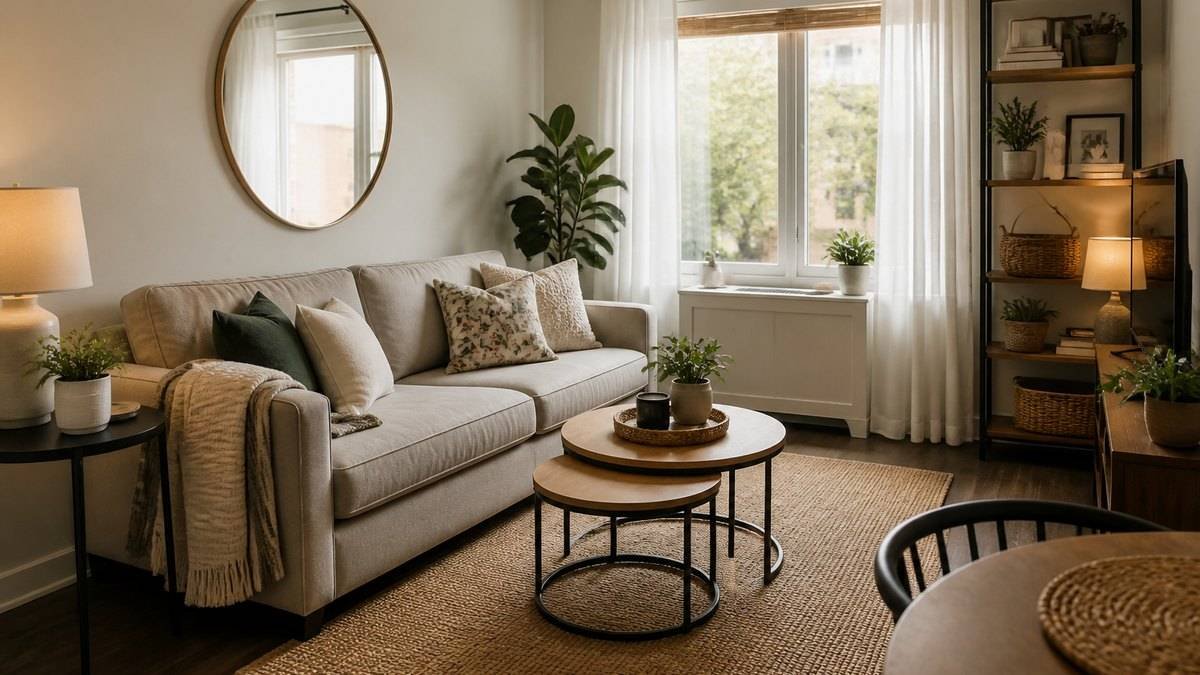
A small room gets cozy from texture, light, and color temperature, not from adding more. The room that feels warm and cramped at once has too many objects; the one that feels warm and open has the right layers.
Small cozy living room decor works on a simple equation: coziness is a sensory layer that sits on top of the space instead of taking it. A throw adds warmth without a footprint, a warm bulb changes the mood without a purchase, and a deep accent color warms a wall without darkening the whole room.
Most of the moves below cost under $100, and the whole room warms up over an afternoon.
Cozy Is Texture and Light, Not More Stuff
Cozy is a sensory quality, warmth you can feel and see, and it comes from texture, light, and color temperature rather than from objects. The hygge tradition that made cozy a design word built it on candles, soft textiles, and warm light, none of which takes floor space, and that is the whole trick for a small room.
The mistake is treating cozy as a quantity problem. A small room buried in pillows, throws, and knickknacks feels warm for an afternoon and cramped every day after, because the objects eat the space the warmth was supposed to make feel safe. The alternative is a room with the same warmth and half the objects, which is what the sensory layer achieves.
The formula has three parts: texture for the touch, warm light for the mood, and color temperature for the walls. Each part adds warmth without adding bulk, and the three together read as cozy without the clutter. The rest of the guide builds each part, and the room that combines them is the room that feels like a hug instead of a hoard.
Texture, light, warmth.
Texture Layers: The Cozy Without the Bulk
Texture layers build coziness without bulk: one throw, two cushions, one rug, and one natural element, placed where the room already is. Each layer adds touch and depth, and the balance that keeps a small room open is a few rich textures instead of many objects.
The soft layer comes first: a chunky throw on the sofa, two cushions in a warm fabric, and a rug under the seating that the feet can feel. The throw and cushions cost $20 to $60 total, and they are the fastest warmth in the room, because the eye reads fabric as comfort and the hand confirms it.
The rug is the texture layer that works the hardest, because it covers the biggest surface and touches the feet. Choose a rug with a soft pile, wool or a wool blend, sized to anchor the seating, and layer a smaller sheepskin or woven mat on top for the winter months. The layering reads as deliberately cozy, and the top layer swaps with the seasons while the base rug stays.
The hard layers balance the soft. Wood, wicker, and ceramic add the natural texture that stops a room from feeling like a blanket pile, and one woven basket, one wooden tray, or one ceramic vase does the job. The natural elements are also the seasonal layer, and the fall-cozy approach that stacks pinecones, dried flowers, and candles on a tray works year-round with the season swapped out.
The texture rule is three soft, two hard, and nothing else. A room with ten cushions and one wood piece feels unbalanced; a room with three soft layers and two natural ones feels composed, and the composed room is the one that reads as warm instead of stuffed.
Warm Light Does the Cozy Work
Warm light is the fastest cozy upgrade in a small room: three light sources at different heights, warm bulbs, and one candle or flame element create the mood that texture alone cannot. Light is the layer that costs the least and changes the room the most, and it never takes floor space.
The three-light setup replaces the single overhead glare that makes a small room feel like a waiting room. A floor lamp, a table lamp, and a wall sconce or a pendant at different heights fill the room with pools of light, and the eye reads layered light as layered comfort. Warm bulbs, labeled 2700K or below, make the same lamp feel different from the cool bulb that shipped with it, and they cost a few dollars.
The lamp placement follows the seating, not the corners. A floor lamp beside the sofa lights the reading spot, a table lamp on the side table lights the coffee surface, and a wall light above the mantel or the art lights the wall, so the room is lit in pools where people sit instead of washed in one glare. The three pools are what make a small room feel inhabited at night, and they cost $40 to $120 total.
The flame element finishes the mood. A candle or a set of candles on the coffee table or the mantel adds the moving light that no lamp replicates, and the flameless versions do the same job in a rental or a home with no candles policy. The light rule is warm, layered, and low, and a small room lit that way feels cozy at six in the evening without a single new object. The one thing the light layer cannot fix is the glow that a bare bulb throws, so a shade on every lamp matters as much as the bulb, because the light that reaches the ceiling and the floor is the light that wraps the room.
Warm Colors That Don’t Shrink the Room
Warm color in a small room follows one rule: keep the big surfaces light and warm, and put the deep warmth in small accents. A light warm white or a soft cream wall reads as warm without closing the room in, and the deep terracotta, olive, or rust lives in the cushions, the art, and one accent wall.
The big surfaces stay light and warm. Warm white, cream, and light beige walls recede like any light color but carry a warmer feel than cool white, and the same warm-neutral rule applies to the sofa and the rug. The paint color matters more than most people think, because a warm white room feels cozy and a cool white room of the same size feels sterile.
The paint undertone is the detail that separates warm from sterile. A warm white has a yellow or cream undertone, while a cool white has blue or gray, and the same color chip can read warm or cold depending on the light in the room. Paint a sample on the wall and check it at noon and at dusk, because the undertone that looks warm in the store can look cold in a north-facing room.
The deep warmth goes into the accents. One terracotta cushion, one olive throw, one rust-framed print, or one deep accent wall behind the sofa adds the color temperature that makes the room feel enveloping, and it does not shrink the room because it stays small. The balance is the H&G advice in practice, bold elements tempered by muted ones, and the rule is one deep accent per surface, never two fighting for the same wall. The small cozy living room decor that keeps the deep color to one accent per surface is the version that stays warm without closing in.
Curves and Soft Edges: Furniture That Feels Cozy
Furniture feels cozy when its edges are soft: a curved armchair, a rounded coffee table, and a sofa with plush cushions read as welcoming, while sharp angles read as modern and cold. The curve rule applies at the scale the room can hold, and a small room gets one curved piece instead of a roomful of angular ones.
The single curved piece is the anchor. A curved armchair or a rounded-back sofa becomes the visual warm spot in the room, and the other pieces, the table, the shelving, stay practical and low. The curved piece does not need to be big; a small rounded chair reads as cozy exactly because it is small and soft, and it fits the scale rules that keep the room open.
The upholstery does the rest. Plush cushions, a soft boucle or velvet fabric, and a seat that invites sitting beat a firm angular sofa for the cozy read, and the fabric choice is the difference between a room that looks warm and one that feels it. The scale rules from the small living room decor ideas guide on this site still apply, because a curved sofa that blocks the walkway is not cozy, it is an obstacle. The fabric that wears the best in a small room is the one that hides the daily life: a textured weave hides the crumbs and the pet hair better than a flat weave, and a washable cover on the sofa cushions means the cozy layer survives the family that lives in it.
Modern Cozy: The Minimalist Warmth
Modern cozy is minimalist warmth: a neutral palette, one natural material, warm light, and almost nothing else, which reads as calm instead of cold. The modern small living room look earns its coziness from the materials and the light, not from the number of objects, and it is the version of this room that feels most open.
The modern cozy formula has four parts. The palette stays neutral, warm white, beige, and one muted accent, with the shapes clean and uncluttered. One natural material, wood, wool, or linen, carries the warmth that the minimalism would otherwise lack. The light is warm and layered, the same three-source setup from the lighting section. And the edit is strict, one or two decorative objects per surface, because in a modern room the empty space is part of the design.
The natural material in a modern cozy room is the one element that carries the warmth. A live-edge wood coffee table, a wool throw, a linen sofa, or a stone lamp base all do the job, and the rule is one dominant natural material plus one secondary. Two woods in the same tone read as intentional; three woods in different tones read as a furniture store.
The modern cozy room proves the whole equation in one room: the warm white walls give the space, the wool throw and the wood table give the warmth, and the warm lamp gives the mood, with almost nothing else present. The room reads as calm and open, and it is the proof that coziness and space are not opposites. The version of this room that fails is the one that adds a second accent color or a third texture, because the modern formula breaks the moment the restraint goes.
The modern small living room decor ideas that follow this formula are the ones that feel expensive and calm, and they work in the smallest rooms because the restraint is the space. The same formula carries into the rooms the family actually lives in, and the family room decor ideas on this site adapt it to the everyday version with the toys and the remotes.
Cozy on a Budget and Through the Seasons
Cozy on a budget is a layering game, not a shopping game: rotate the throws and the cushions with the seasons, add the candles and the natural elements, and keep the base room unchanged. The seasonal swap costs under $50 twice a year, and it keeps the cozy feeling fresh without redecorating.
The base room does the heavy lifting. The warm white walls, the texture layers, and the three-light setup stay the same all year, and the seasonal layer on top is what changes: fall brings the terracotta cushions and the dried flowers, winter brings the chunky knit and the extra candles, spring and summer lighten the layers and open the windows. The swap is a tray and a couple of cushions, not a renovation.
The budget rule is that the base gets the money and the seasonal layer gets the rotation. A good rug and a good lamp last for years and carry the room; the seasonal throw and the candles cost $20 and change with the weather. The small cozy living room that stays warm all year is the one with the stable base and the rotating top, and it costs about $100 to start.
The budget order for a cozy small room is the same as the layering order: light first, then texture, then color. A warm lamp and a dimmer change the room for $25, the throw and the cushions add the touch for $40, and the accent color arrives with one cushion or one print for $20. The whole recipe runs about $100, and the base room improves with every layer. Small cozy living room decor on a budget is the same recipe with a smaller cart, and the layers do the work in order.
Three textures, one warm light setup, and one deep accent is the whole recipe, and it costs about $100 and an afternoon. The small cozy living room was never about adding more; it was about texture, light, and color temperature, which warm the space without taking it, and that is a room that feels like a hug and looks twice its size. That is the whole recipe, and the room does the rest of the work itself.